How Smartphone Displays Improved From Lcd To Oled
The Incredible Journey: How Smartphone Displays Improved from LCD to OLED
Remember the days when smartphone screens were just... screens? They showed you information, maybe a pixelated game, but the visual experience wasn't exactly breathtaking. Fast forward to today, and our phone displays are vibrant windows to digital worlds, capable of showing stunning HDR content and silky-smooth animations. This remarkable transformation is largely due to a pivotal shift in display technology: an impressive journey detailing how smartphone displays improved from LCD to OLED.
For years, Liquid Crystal Displays, or LCDs, were the undisputed champions of mobile screens. They did their job reliably, but with certain limitations that often went unnoticed until a better alternative emerged. This evolution from LCD to OLED has redefined what we expect from our portable screens, delivering a visual feast that was once unimaginable in the palm of our hands.

LCD's Reign: The Reliable Workhorse of Early Smartphones
Before OLED became mainstream, LCD panels powered the vast majority of our mobile devices. These displays rely on a backlight, typically an array of LEDs, to illuminate liquid crystals. These crystals then twist and untwist to block or allow light to pass through, combining with color filters to create the images we see.
LCDs were a cost-effective and relatively bright solution for their time. They offered decent image quality and were robust enough for everyday use. However, their reliance on a constant backlight meant that even when displaying black, some light would invariably leak through, leading to what's often called "grey blacks" rather than true darkness. This limitation also impacted contrast levels significantly.
Other downsides included less-than-perfect viewing angles, where colors and brightness could shift dramatically if you weren't looking straight on. The backlight unit also added to the overall thickness of the display, influencing phone design. Despite these quirks, LCDs served us well for many years, laying the foundation for what was to come.
The Arrival of OLED: A Glimpse into Display Innovation
The introduction of Organic Light Emitting Diode (OLED) technology marked a paradigm shift. Unlike LCDs, OLED screens are self-emissive, meaning each individual pixel generates its own light. This fundamental difference eliminates the need for a separate backlight unit altogether, opening up a world of possibilities for display quality and device design.
Initially, OLED found its way into smaller screens, like those on early MP3 players or feature phone sub-displays. The technology was promising but challenging to scale up for larger smartphone screens due to manufacturing complexities and cost. However, as production techniques improved, the potential of OLED began to shine, promising a level of visual fidelity that LCDs simply couldn't match.
Why OLED Became the King: Unpacking Its Core Advantages
Once OLED started appearing in flagship smartphones, its superiority quickly became apparent. The most striking advantage is the ability to achieve perfect blacks. Because each pixel can be individually turned off, when an OLED display shows black, those pixels emit no light whatsoever. This results in an infinite contrast ratio, making colors pop with incredible vibrancy against a truly dark background.
This self-emissive nature also contributes to stunning color reproduction. OLED screens typically offer a wider color gamut and more saturated colors, bringing photos and videos to life with unparalleled realism. Moreover, for content with dark themes or dark mode interfaces, OLED displays are significantly more energy efficient. Since dark pixels are off, they consume no power, directly translating into better battery life for users who embrace darker UIs.
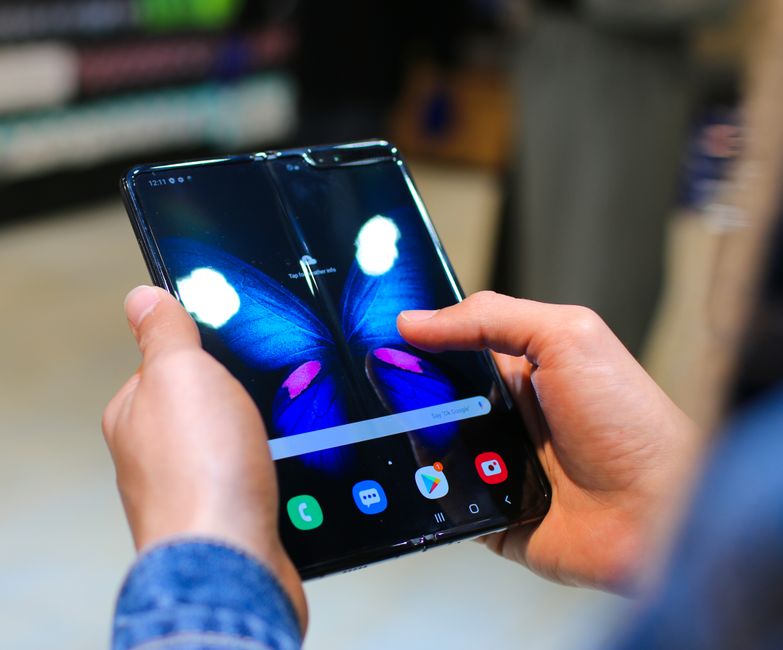
Beyond visual fidelity, OLED's lack of a backlight unit allows for incredibly thin and even flexible display panels. This architectural freedom has been instrumental in creating sleeker phones, edge-to-edge designs, and, more recently, revolutionary foldable smartphones. The absence of a rigid backlight also vastly improves viewing angles, ensuring consistent color and brightness no matter how you hold your device.
From LCD to OLED: A Visual Revolution on Your Handset
The transition from LCD to OLED didn't happen overnight, but once it gained momentum, it swiftly reshaped our expectations of smartphone screens. Early adopters like Samsung heavily invested in AMOLED (Active Matrix OLED) technology, showcasing its capabilities years before many competitors. Apple's gradual shift from Retina LCDs to Super Retina OLEDs in its iPhone lineup further cemented OLED's status as the premium display choice, highlighting how smartphone displays improved from LCD to OLED in the eyes of millions.
This shift wasn't just about technical specifications; it was about the user experience. Suddenly, streaming videos had cinematic depth, photos looked more true-to-life, and even just scrolling through social media felt smoother and more engaging. The richer colors and deeper blacks transformed mundane interactions into delightful visual events.
The journey demonstrated a clear evolution from displays that simply presented information to screens that immerse and captivate. It underscored the importance of the display as the primary interface, emphasizing that the quality of the window through which we view our digital lives directly impacts our overall satisfaction with our devices.
Beyond the Basics: Advanced Features Fueled by OLED
OLED's unique properties have enabled a host of advanced features that were either impossible or impractical with LCD technology. One prime example is the Always-On Display (AOD). Because individual pixels can be lit independently, an AOD can show essential information like time, date, and notifications using only a tiny fraction of the screen's pixels, consuming minimal power.
Another breakthrough is the integration of under-display fingerprint sensors. With OLED, there's no bulky backlight to block optical or ultrasonic sensors placed beneath the screen. This allows for cleaner, bezel-less phone designs without compromising security or convenience. Furthermore, while high refresh rates (like 90Hz or 120Hz) can be found on both LCD and OLED, OLED panels often deliver a more consistent and impactful high refresh rate experience due to their faster pixel response times and superior contrast, leading to incredibly fluid scrolling and gaming.
The ability of OLED to render extreme dynamic range is also crucial for HDR (High Dynamic Range) content. With its perfect blacks and capability for very bright highlights, OLED displays can showcase HDR videos and images with breathtaking realism, reproducing scenes with a fidelity that truly brings content to life.
The Evolution Continues: Challenges, Refinements, and What's Next
While OLED technology offers significant advantages, it also faced initial challenges. Early concerns about "burn-in" or "image retention" were prominent. This phenomenon, where static images could leave a faint, permanent ghost on the screen, has been largely mitigated through sophisticated software algorithms, pixel shifting, and material improvements. Today's OLED panels are incredibly resilient, making burn-in a rare issue for most users.
Cost was another barrier, with OLED panels being significantly more expensive to produce than LCDs. However, as manufacturing processes matured and economies of scale kicked in, OLED screens became more affordable, making them accessible to a wider range of devices, not just the premium flagships. The longevity of OLED materials has also seen continuous improvements, ensuring your vibrant screen will last for years.
Looking ahead, the display landscape is constantly evolving. Flexible OLEDs are already enabling foldable and rollable phones, pushing the boundaries of device form factors. While technologies like MicroLED are on the horizon as potential successors, OLED continues to dominate the high-end smartphone market, with ongoing refinements in brightness, efficiency, and color accuracy. The journey of display innovation is far from over, but the leap from LCD to OLED remains one of its most pivotal chapters.