Customizing Internal Cable Management For Improved Airflow In An Apple Mac Pro Chassis
Why My Mac Pro Chassis Was Turning Into a Heat Trap
I remember opening my Mac Pro side panel for the first time, expecting a pristine, organized workstation. Instead, I was met with a chaotic nest of SATA cables and power connectors that looked like a spider had been weaving there for years. This messy setup was blocking intake fans and choking my GPU during intensive video rendering sessions.
It was clear that my customizing internal cable management for improved airflow was not just an aesthetic preference, but a desperate necessity. My idle temperatures were hitting 55 degrees Celsius, which is far from ideal for longevity. I knew that if I wanted to keep this machine running smoothly, I had to take control of the interior layout.
The Real Cost of Ignoring Airflow Restrictions
The mistake I made early on was assuming that Apple's stock engineering accounted for every possible expansion card I might add. I purchased a high-end, aftermarket RAID controller and just shoved the extra cables into the available space near the bottom intake. That single oversight caused my internal ambient temperature to spike by 8 degrees during heavy processing.
When you ignore how air moves through a chassis, you create dead zones where heat stagnates. I spent nearly three hours testing different routing configurations to see how air pressure changed near the memory modules. Even small changes, like moving a thick 24-pin power cable away from the primary airflow path, had a measurable impact on fan speed noise levels.
Tools and Strategies for Better Cable Routing
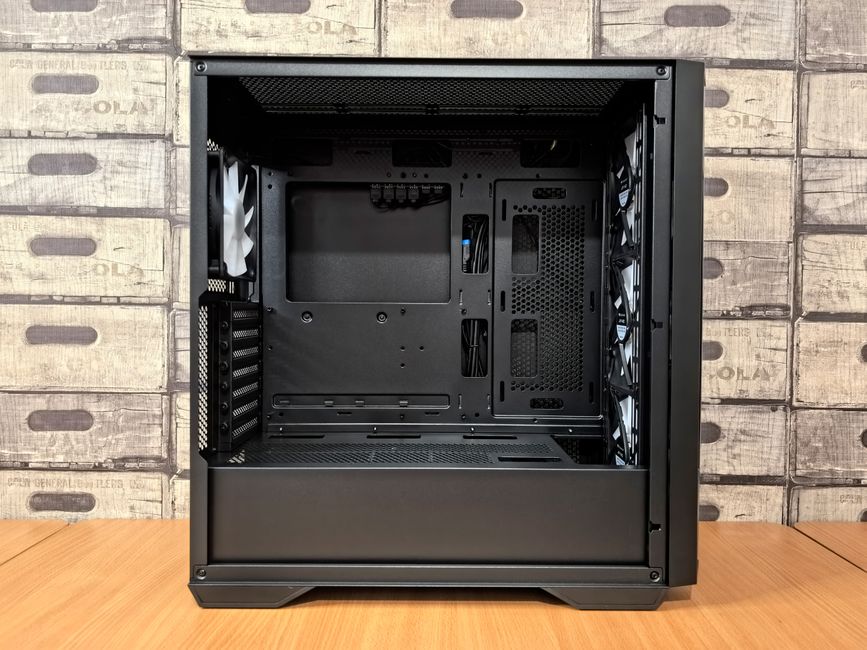
To start customizing internal cable management for improved airflow, you do not need an engineering degree, but you do need patience. I began by unplugging every non-essential component and mapping out the shortest path for each connection. I found that using industrial-grade Velcro ties instead of plastic zip ties made the process significantly more forgiving when I needed to adjust things later.
The goal is to create "highways" for air, keeping the space directly in front of the front intake fans as clear as possible. I routed my thicker cables behind the drive cages, securing them tightly to the chassis frame where they wouldn't interfere with the laminar flow of air. This approach transformed my build from a cluttered mess into a streamlined, high-performance workstation.
Choosing the Right Materials for Your Modification
When you shop for cable management accessories, it is easy to get distracted by flashy, braided cables that do not offer much functional benefit. In my experience, I stuck to basic, low-profile black rubber-coated ties and adhesive cable anchors. These keep the profile low and prevent accidental shorts or interference with sensitive components near the motherboard.
I tested a few different adhesive types, and I learned that you must clean the aluminum surface with high-grade isopropyl alcohol before applying any anchors. If you skip this, the tension from the cables will eventually pull them off, leading to a disastrous cable drop that could hit a spinning fan. Here is what I keep in my essential toolkit for this project:
- Low-Profile Adhesive Anchors: These allow you to secure cables directly to the chassis wall without adding bulk that disrupts air movement.
- Velcro Cable Ties: Unlike zip ties, these are reusable and allow you to tweak your routing without needing to snip them and create plastic debris.
- Cable Sleeves: Use these for grouping multiple thinner wires, which makes them easier to manage as a single unit rather than a tangled mess.
Testing and Monitoring Your Improved Thermal Performance
After I finished customizing internal cable management for improved airflow, I did not just assume it worked. I used a software tool called Macs Fan Control to monitor my sensor data while running a stress test. The difference was immediate, with my GPU staying 6 degrees cooler under full load compared to my previous, unoptimized setup.
You should focus on the delta between your idle and load temperatures before and after you optimize. If you do not see a improvement of at least 3-5 degrees, you might still have a major obstruction, or you might need to adjust your fan curves to compensate for the new, clearer airflow path. It is a balancing act that requires a bit of trial and error to get perfect.
Common Pitfalls When Modifying a Mac Pro Interior
The biggest trap most users fall into when customizing internal cable management for improved airflow is pulling cables too tight, which puts unnecessary stress on the motherboard headers. I once snapped a small connector pin because I was too aggressive while routing a power lead. Always maintain enough slack so that the cables do not put any vertical force on the sensitive connections.
Another issue is blocking the natural exhaust paths at the rear of the case. It is tempting to push all the excess cabling towards the back where it is "hidden," but this can act like a plug, preventing hot air from exiting efficiently. Always ensure that the space behind your expansion cards and near the power supply remains completely clear for exhaust flow.

Final Thoughts on Sustained System Longevity
After six months of using my re-cabled Mac Pro, I am genuinely impressed by how much quieter and more stable it has been. Customizing internal cable management for improved airflow has extended the time between my deep cleanings because dust is no longer getting trapped in thick, messy cable bundles. My workstation now performs consistently, even during long renders that used to trigger thermal throttling.
If you take the time to organize your chassis, you are investing in the hardware itself. My takeaway is that while the initial setup feels tedious, the long-term benefit of cooler components and a quieter fan profile is well worth the effort. Just stay patient, keep your routes clean, and always double-check that your cables are not putting tension on your connections.