How To Transition From Casual To Competitive First-Person Shooter Play
How to Transition from Casual to Competitive First-Person Shooter Play
I remember sitting in my room, staring at my screen, wondering why I consistently lost every gunfight in my favorite shooter. I was playing on a standard office mouse and a massive, muddy desk mat that barely allowed for consistent tracking. It was the moment I realized that wanting to transition from casual to competitive first-person shooter play required more than just "getting good"—it required understanding the limitations of my gear and my own bad habits.
That realization led me down a rabbit hole of optimizing my setup. I started by swapping out my heavy, wireless "office" mouse for a dedicated gaming mouse that weighed under 60 grams. The difference in my flick shots was immediate, making me realize just how much my hardware had been holding back my potential in those fast-paced matches.
Establishing a Professional-Grade Foundation
The first step I took when I decided to get serious was standardizing my physical environment. If you want to take your gameplay to the next level, you must treat your desk as a performance zone, not just a place to relax. My biggest mistake early on was ignoring my monitor's refresh rate, thinking 60Hz was enough when my GPU was pushing well over 200 frames per second.
I eventually upgraded to a 240Hz monitor, and it completely transformed how I perceived enemy movement. The reduced motion blur allowed me to track targets with significantly more precision during frantic skirmishes. You don't need the most expensive gear on the market, but you do need consistency, so ensure your monitor and input devices are reliable enough to offer a competitive edge.

The Truth About Sensitivity and Muscle Memory
I spent years changing my mouse sensitivity every single week, thinking I was finding the "perfect" setting. In reality, I was just destroying my muscle memory. When I finally forced myself to stick to a lower sensitivity setting, my ability to hit consistent headshots increased dramatically because my brain could finally predict exactly how far I needed to move my arm to track an enemy.
For your own setup, I highly recommend finding a sensitivity that allows for a full 180-degree turn when you swipe across your entire mouse pad. Consistency is the secret ingredient that turns missed shots into eliminations. Practice your tracking for at least 30 minutes a day using dedicated software like Aim Lab to solidify those neural pathways.
Why Hardware Specs Actually Matter
Many players assume that their computer's power doesn't impact their performance, but I learned the hard way that system latency is a silent killer. When I tested my frametimes, I realized that my CPU was bottlenecking my GPU, causing stuttering during intense firefights that cost me crucial milliseconds. I spent time optimizing my Windows settings and BIOS to ensure the lowest possible input lag.
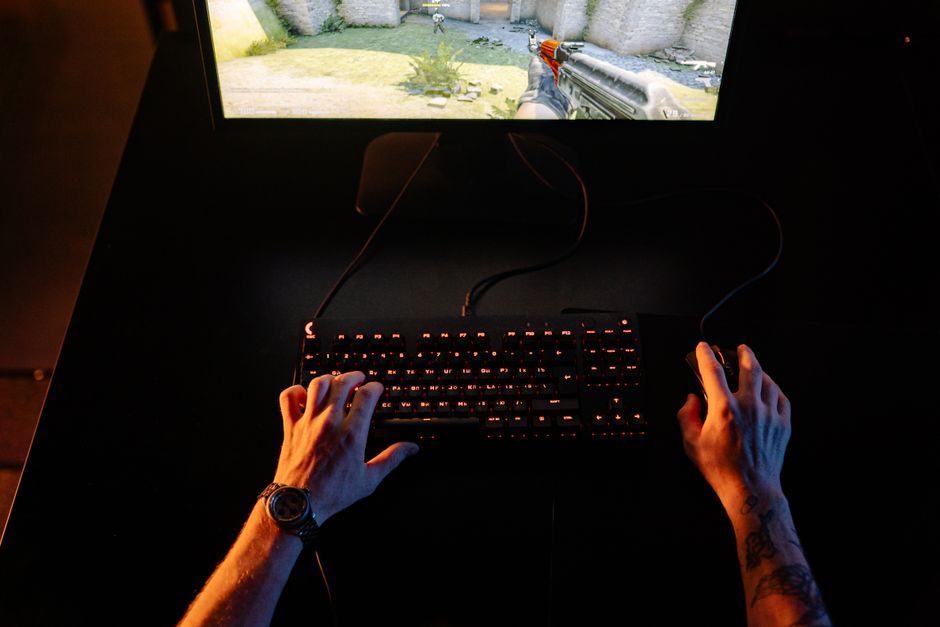
If you are serious about your goal to transition from casual to competitive first-person shooter play, you need to be aware of these technical factors:
- Disable mouse acceleration in Windows settings to maintain raw input.
- Use a wired connection for your internet to prevent packet loss spikes.
- Cap your frame rate slightly below your monitor's max refresh rate to keep input lag stable.
- Update your graphics drivers regularly to benefit from game-specific latency optimizations.
Mastering Map Knowledge and Positioning
Aim is only half the battle; the other half is understanding exactly where to stand. I used to run into rooms hoping for the best, only to be eliminated by players who had better angles. I started spending time in empty private matches just walking around the maps to understand the sightlines and common chokepoints.
Positioning is about giving yourself the highest probability of winning an engagement before a single bullet is fired. By learning to hug corners properly and always keeping my crosshair at head level, I found myself winning fights against players who clearly had better mechanical aim than I did. Always prioritize angles that force your opponent to expose more of themselves than you do.
Developing the Competitive Mindset
Transitioning to competitive play also means managing your mental state during a match. I’ve been using a simple breathing technique between rounds to reset my focus whenever I feel frustrated by a loss. Maintaining a cool head allows you to analyze your mistakes constructively rather than spiraling into a series of impulsive, bad decisions.
Record your own gameplay and watch it back with a critical eye, even if it is uncomfortable to see your own failures. Watching my own footage helped me identify that I was constantly reloading at the wrong times. This specific habit, once identified, was easy to fix and immediately improved my survivability in intense competitive scenarios.

Final Thoughts on Consistent Growth
The journey to improve is not linear, and there will be days where you feel like you aren't making any progress. I spent over 200 hours testing various sensitivity settings and game configurations before I finally felt comfortable in high-stakes lobbies. The most important thing is to keep experimenting with your settings while focusing on refining one specific skill at a time.
If you genuinely want to transition from casual to competitive first-person shooter play, stop looking for a "magic" settings file online and start building your own consistency. Your gear matters, your settings matter, but your dedication to analyzing and correcting your own gameplay will always be the most important factor in your success.