How Smartphones Enable Immersive Experiences
Unlocking New Realities: How Smartphones Enable Immersive Experiences
Our smartphones have evolved far beyond simple communication devices. They're now powerful portals, transforming how we interact with digital content and even the world around us. This pocket-sized technology is at the forefront of delivering incredibly engaging and interactive encounters, fundamentally changing how smartphones enable immersive experiences for millions every day. From casual gaming to exploring virtual landscapes, our devices are constantly pulling us deeper into rich, sensory worlds.Gone are the days when a phone was just for calls and texts. Today's smartphones pack incredible processing power, high-resolution displays, and sophisticated sensors. These advancements are the bedrock upon which truly immersive digital experiences are built, making our everyday interactions with technology more vibrant and personal.
Whether you're streaming a movie, playing a game, or trying on virtual furniture, your smartphone is meticulously crafted to make you feel like you're truly there. It's a blend of cutting-edge hardware and clever software design working in harmony to blur the lines between the digital and physical.

Blending Digital with Reality: Augmented Reality (AR)
One of the most compelling ways smartphones create immersion is through Augmented Reality (AR). This technology overlays digital information and imagery onto our real-world view, often through the phone's camera. Suddenly, your living room can become a battleground for digital monsters or a showroom for virtual products.
Popular AR applications like Pokémon GO showed us the potential of digital elements interacting with our physical surroundings. But AR extends far beyond games, enhancing everything from shopping and interior design to education and navigation. It's about bringing the virtual into your immediate environment, making interactions feel more tangible.
Imagine trying on new glasses virtually, seeing how a new sofa would look in your home, or following animated directions overlaid directly onto the street ahead. These aren't just novelties; they're practical applications that deepen engagement by making digital content feel truly present in our physical lives.
Gaming Reimagined: More Than Just Tapping
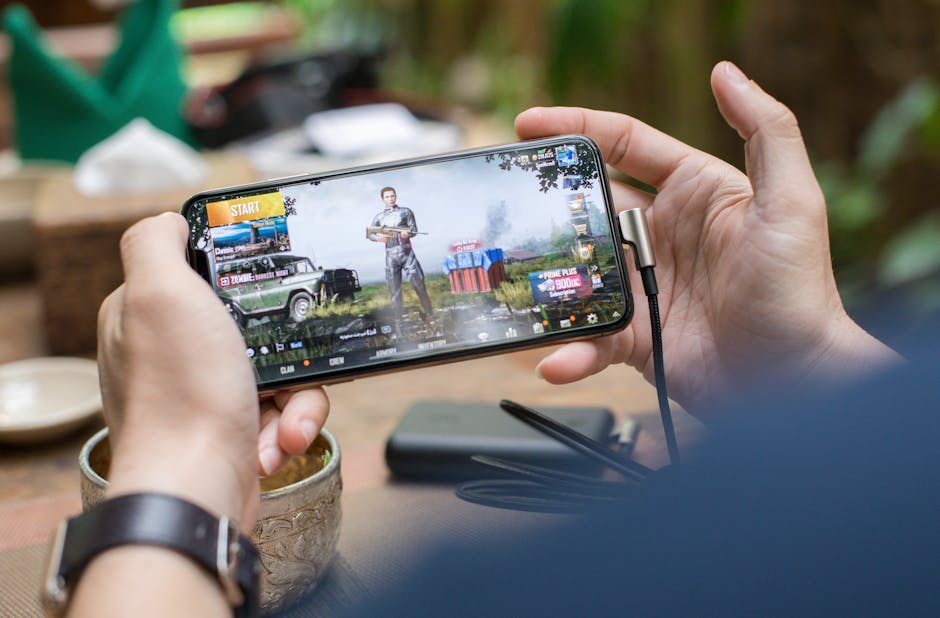
Mobile gaming has undergone a massive transformation, moving from simple tap-to-play mechanics to highly complex and visually stunning experiences. Modern smartphones are powerhouse gaming machines, rivaling dedicated handheld consoles from just a few years ago. This leap in capability is central to creating truly immersive gameplay.
High-fidelity graphics, intricate sound design, and responsive controls now define the mobile gaming landscape. Developers leverage the full potential of smartphone hardware, including gyroscopes for motion control, powerful haptic engines for tactile feedback, and stunning OLED screens that bring vibrant worlds to life right in your hands.
The immersive quality of mobile games is further enhanced by their accessibility. You can jump into a rich, detailed world anytime, anywhere, carrying epic adventures in your pocket. This convenience, combined with console-quality experiences, makes smartphones the ultimate device for on-the-go digital escapism.
Sensory Symphony: Visuals, Sound, and Touch
The core components of a smartphone work in concert to deliver a rich sensory experience. High-resolution, vibrant displays are paramount, offering incredible color accuracy and contrast that make digital content pop. Whether it's a breathtaking landscape in a game or a close-up of a movie scene, the visual quality is designed to captivate.
Audio plays an equally critical role. Stereo speakers, often tuned for spatial audio, create expansive soundscapes that draw you into the action. Combine this with premium headphones, and you're transported to another dimension, where every whisper and explosion feels incredibly real and strategically placed around you.
Beyond sight and sound, haptic feedback adds another layer of immersion. Subtle vibrations and precise tactile responses mimic real-world sensations, from the rumble of an engine to the impact of a virtual bullet. This physical feedback engages yet another sense, making interactions feel more grounded and believable.
Interactive Storytelling and Media Consumption
Smartphones are changing how we consume and engage with media, moving beyond passive viewing to deeply interactive experiences. Content creators are increasingly designing stories and documentaries specifically for mobile, leveraging touch controls and device orientation to let users explore narratives from multiple angles.
From 360-degree videos that place you directly in the scene to interactive narratives where your choices affect the outcome, media consumption becomes a personal journey. This level of control and personalization fosters a much deeper connection with the content, making you an active participant rather than a mere observer.
Even social media and online learning platforms are adopting immersive elements. Live streams with interactive polls, AR filters for video calls, and gamified educational apps all contribute to a more engaging and memorable experience. Our phones are transforming passive consumption into active participation.
The Innovation Engine: How Smartphones Enable Immersive Experiences
The continuous innovation in smartphone technology is the driving force behind ever-more compelling immersive experiences. Each generation brings faster processors, more capable graphics units, and a suite of advanced sensors that open new possibilities for developers and content creators.
Consider the array of sensors packed into modern devices:
- Accelerometers and Gyroscopes: Enable motion control in games and 360-degree content viewing.
- GPS and Location Services: Crucial for location-based AR experiences and navigation.
- Advanced Cameras: Used for AR overlays, depth sensing, and high-quality video capture for content creation.
- LIDAR Scanners (on some models): Provide precise depth mapping for highly realistic AR and virtual environments.
These sophisticated components work in harmony, creating a robust platform that allows for complex real-time rendering and interaction. Without this powerful underlying hardware, the seamless and believable immersive experiences we enjoy today simply wouldn't be possible.
The Road Ahead: Ever Deeper Immersion
The journey towards ultimate immersion on smartphones is far from over; it's a rapidly evolving landscape. We're on the cusp of even more sophisticated AR applications, potentially integrating seamlessly with smart glasses to offer always-on, contextual digital overlays without even needing to pull out your phone.
Advancements in AI and machine learning will further personalize these experiences, making digital interactions feel even more intuitive and responsive. Imagine AI companions within games that learn your play style or AR assistants that proactively provide information based on your surroundings and habits.
Ultimately, our smartphones are not just devices; they are gateways to new realities. They democratize access to virtual worlds, interactive stories, and augmented perspectives on our own environment. As technology continues to push boundaries, we can only expect these pocket-sized marvels to draw us even deeper into incredible, immersive adventures.