How Smartphone Software Interacts With Hardware
The Invisible Dance: How Smartphone Software Interacts with Hardware to Create Magic
Ever wonder why your smartphone feels so incredibly responsive, seamlessly shifting between apps, snapping stunning photos, or recognizing your face in an instant? It all boils down to a sophisticated and constant conversation happening behind the scenes: how smartphone software interacts with hardware. This isn't just a simple connection; it's a dynamic partnership where each component relies on the other to deliver the smooth, powerful experience we've come to expect every day.
From the moment you tap your screen, a complex chain of commands and responses springs into action. Software, the invisible intelligence, directs the physical components, telling them exactly what to do and when to do it. This intricate ballet is what transforms inert circuits into a powerful personal assistant in your pocket.
The Brain and the Body: A Dynamic Duo
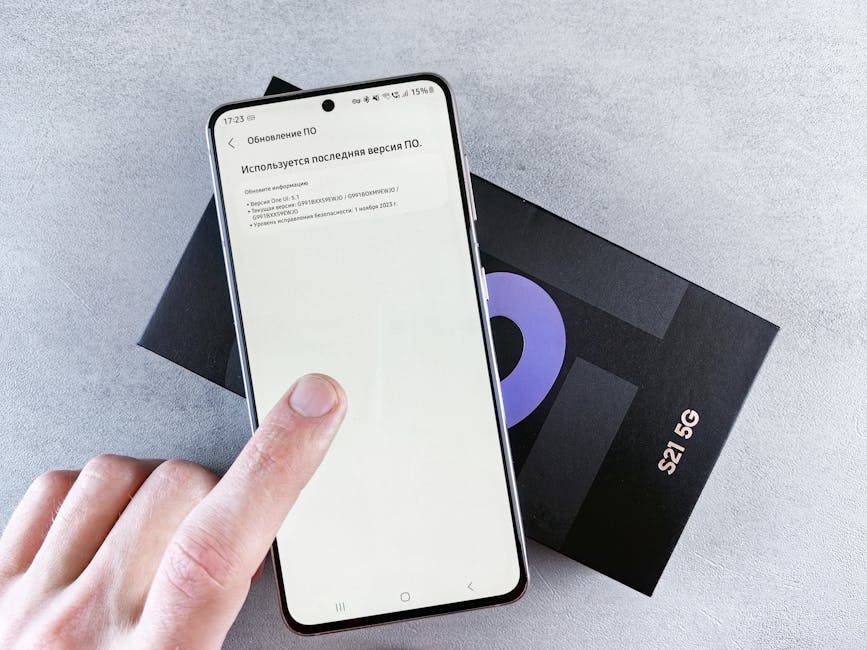
Think of your smartphone's software as its brain and the hardware as its body. The software sends instructions – "open this app," "capture this image," "play this sound" – and the hardware carries them out, performing the physical actions. This constant back-and-forth ensures everything works in harmony.
When you swipe through your photos, the software instructs the display hardware to refresh, the processor to load new images, and the memory to recall data. Without this precise communication, your device would simply be a collection of inert parts. It's the synergy between them that unlocks the device's true potential.
The Operating System: The Master Orchestrator
At the heart of this interaction lies the operating system (OS), whether it's Android or iOS. The OS is the primary piece of smartphone software that acts as the grand orchestrator, managing all the hardware resources. It's the central hub through which all other applications and processes must pass to access the physical components.
The OS ensures that different apps can share hardware resources without conflicting, allocating processor time, memory, and battery power efficiently. It provides a stable environment for everything to run smoothly, handling the complexities of hardware management so app developers don't have to.
Device Drivers: Hardware's Humble Translators
Even with a powerful OS, direct communication with every single piece of hardware would be a nightmare. This is where device drivers come into play. These specialized bits of software act as translators, providing the operating system with a standard way to interact with specific hardware components like the camera, Wi-Fi chip, or touchscreen.
Each driver contains the unique instructions needed to operate its corresponding piece of hardware. When the OS wants to use the camera, it doesn't need to know the camera's precise technical specifications; it just sends a standard command to the camera driver, which then translates it into actions the camera hardware understands.
Firmware: Hardware's Built-in Instructions
Before the OS even fully loads, there's another layer of software at play: firmware. Firmware is low-level software permanently embedded within the hardware itself. It contains the fundamental instructions that tell the hardware how to start up, perform basic functions, and communicate with the OS.
For example, the bootloader, a type of firmware, initiates the startup process and loads the operating system. You'll find firmware in nearly every component, from your phone's storage chip to its modem, ensuring each piece knows how to operate on its most basic level even without an active OS.
Apps and Sensors: Directing the Orchestra
Beyond the core OS and drivers, individual applications also play a significant role in how smartphone software interacts with hardware. When you launch a camera app, it sends requests to the OS, which then uses the appropriate drivers to activate the camera sensor, lens, and flash hardware. Similarly, fitness apps tap into various sensors to collect data.
Our phones are packed with tiny sensors that continuously gather information. Software reads this data and translates it into useful features. Here are a few examples:
- Camera apps activate the image sensor, lens, and image signal processor to capture photos and videos.
- Fitness trackers utilize accelerometers and gyroscopes to count steps and monitor movement.
- Navigation apps leverage the GPS receiver hardware to pinpoint your location and guide your journey.
- Gaming apps often use the GPU (Graphics Processing Unit) to render complex 3D environments and accelerometer for tilt controls.
Optimization: Making Every Component Count
The ultimate goal of this software-hardware symphony is optimization. Software engineers constantly refine code to squeeze every last drop of performance and efficiency from the underlying hardware. This involves sophisticated power management algorithms to extend battery life, intelligent resource allocation to prevent slowdowns, and thermal management to keep the device from overheating.
A well-optimized software stack can make even moderately powerful hardware feel incredibly fast and smooth. Conversely, poorly optimized software can make even top-tier hardware frustratingly slow and prone to crashes. This continuous refinement is why your phone can feel even better after a software update, despite no changes to its physical components.
The Seamless Future of Smartphone Interaction
As technology evolves, the integration between smartphone software and hardware only gets deeper and more sophisticated. Innovations like on-device AI processing leverage specialized neural processing units (NPUs) to handle complex tasks directly on your phone, making features like real-time language translation or advanced image processing faster and more private.
This endless pursuit of better interaction will continue to redefine what our smartphones can do. From augmented reality experiences that seamlessly blend digital and physical worlds to more intuitive user interfaces powered by advanced sensors, the ongoing dialogue between software and hardware promises an exciting and ever-smarter future for our most personal devices.