How Ray Tracing Improves Video Game Graphics
The Evolution of Visual Realism in Gaming
When you look at modern games, the level of visual detail is staggering. It is no longer just about high-resolution textures or a high polygon count; it is about how light behaves in a virtual space. Understanding how ray tracing improves video game graphics is essential for anyone who wants to appreciate the massive technological leap we are currently witnessing in digital entertainment.
For years, developers relied on clever tricks to simulate light. While these methods were effective for their time, they lacked the physical accuracy that makes a scene look truly believable. Now, we are entering a new era where light interaction is calculated in real-time, bringing unprecedented fidelity to our screens.
This transition changes everything from the way water reflects the sunset to how shadows stretch across a busy street. It is not merely a graphical setting you toggle on; it is a fundamental shift in how games render the world around us. By moving closer to how light functions in reality, games are becoming more immersive than ever before.
Moving Past Traditional Rasterization
For decades, the standard method for rendering 3D graphics was rasterization. This technique converts 3D objects into 2D pixels on your screen by projecting them onto a flat surface. It is extremely fast and efficient, which is why it has been the industry workhorse for so long.
However, rasterization has significant limitations when it comes to lighting. Because the graphics card is not actually calculating light paths, developers have to "fake" reflections, shadows, and ambient lighting using pre-baked images or approximated shaders. These techniques often break immersion because they fail to react dynamically to changes in the environment.

How Ray Tracing Improves Video Game Graphics Through Physics
Ray tracing is a rendering technique that mimics the physical behavior of light by tracing the path of individual light rays as they travel through a scene. Instead of approximating light, the engine calculates where light originates, how it bounces off surfaces, and how it is eventually absorbed or reflected toward the camera. This mimics the way human eyes perceive light in the real world.
When a light ray hits an object, the algorithm determines if it is reflected, refracted, or absorbed based on the object's material properties. A mirror will reflect almost all light, while a piece of wood will scatter it. This level of physical simulation adds immense depth, making virtual environments feel solid, tangible, and authentically lit.
True-to-Life Global Illumination
One of the most transformative aspects of this technology is global illumination. In the real world, light does not just come from a source; it bounces off every surface it strikes, lighting up dark corners and creating subtle color bleeding. This indirect lighting is crucial for realism, but it is notoriously difficult to achieve with older methods.
Ray tracing handles global illumination naturally by tracing these secondary bounces. This ensures that a red wall will cast a faint red glow onto the floor next to it, and objects hidden in shadow still receive light reflected from other nearby surfaces. The result is a scene that looks cohesive and natural, rather than like a collection of objects lit by isolated lamps.

Bringing Reflections to Life
Reflections have always been a challenge in game design, often appearing blurry, distorted, or completely absent on many surfaces. Older games had to use static reflection maps that did not update, meaning a character might walk past a mirror but not see their own movement. These limitations were often glaringly obvious to players.
With ray-traced reflections, surfaces like water, glass, polished metal, and wet pavement become fully dynamic. They accurately reflect everything in the scene, including objects that are currently off-screen. This creates a level of visual consistency that our brains recognize instantly as "real," significantly boosting the overall credibility of the virtual environment.
The Role of Realistic Shadows
Shadows are more than just dark areas on the ground; they provide essential cues about the size, shape, and position of light sources. Traditional methods often produced sharp, uniform shadows that looked artificial because they did not account for the distance between the light source and the object. Contact shadows, where an object meets a surface, often lacked the necessary subtle darkening that makes an object feel "grounded."
Ray tracing solves this by generating shadows based on the physical size of the light source. This leads to:
- Soft shadows that gradually become blurrier the further they are from the object.
- Contact shadows that are sharp and defined right where an object touches the ground.
- Transparent shadows that accurately account for light passing through colored glass or smoke.
Understanding the Hardware Demands
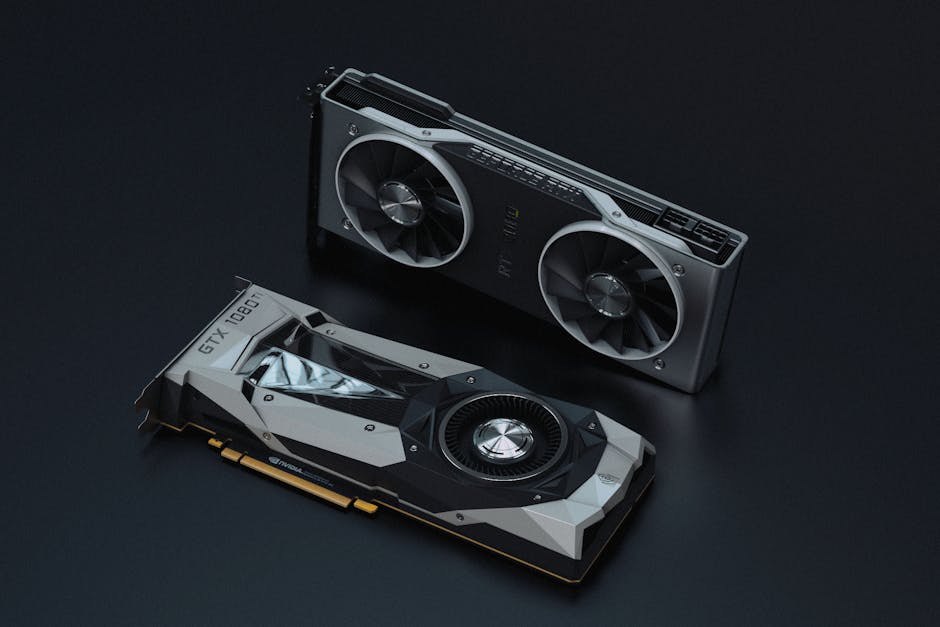
All of this photorealism comes with a heavy computational cost, as the graphics card must perform billions of calculations every second. Because of this, dedicated hardware components known as RT cores were developed to handle these specific mathematical tasks efficiently. Without this specialized silicon, the performance drop would make real-time gaming impossible.
This is why most modern gaming setups use AI-driven upscaling technologies to bridge the gap. By rendering the game at a lower resolution and using machine learning to intelligently upscale the image, players can enjoy the benefits of ray tracing without sacrificing smooth frame rates. It is this synergy between specialized hardware and intelligent software that makes the experience accessible.
The Future of Graphics
The trajectory of gaming visuals is clear, with real-time lighting simulation becoming the new foundation for visual excellence. As hardware continues to improve, the performance overhead of ray tracing will decrease, allowing developers to push even further. We are moving toward a point where the distinction between pre-rendered cinematic scenes and real-time gameplay will effectively vanish.
This is not just about making games look better; it is about providing creators with more powerful tools to tell stories and build worlds. Lighting is one of the most powerful ways to set the mood, and the ability to control it with physical accuracy opens up new possibilities for artistic expression. We are truly witnessing the next great leap in interactive digital media.