How Real Time Rendering Works In Games
The Magic Behind Immersive Gaming
Have you ever paused during a fast-paced game to admire the scenery or marvel at how light interacts with a character's armor? That incredible sense of presence is made possible by real time rendering, a sophisticated process that translates raw data into the visual experience on your screen. It is essentially a high-speed artistic performance happening dozens, or even hundreds, of times every single second.
Unlike pre-rendered movies, where frames are generated over hours or days, video games must create images instantly based on your inputs. This requirement means the computer has to make split-second decisions about lighting, geometry, and textures to keep the action fluid. Understanding how this happens helps you appreciate the incredible engineering driving your favorite interactive worlds.
How Real Time Rendering Shapes Your Experience
When you move your character in a game, the engine doesn't just play a video; it recalculates the entire scene from your new perspective. Every object, shadow, and light source must be updated to match the camera's position accurately. This happens so quickly that your brain perceives it as continuous, fluid motion rather than a series of individual still images.
This process requires a massive amount of coordination between the CPU and the GPU. The CPU handles game logic, physics, and input processing, while the GPU takes that data and transforms it into the pixels you see on the screen. It is a constant, rhythmic exchange of information that ensures everything in the environment responds appropriately to your actions.
The Heavy Lifting Done by GPUs
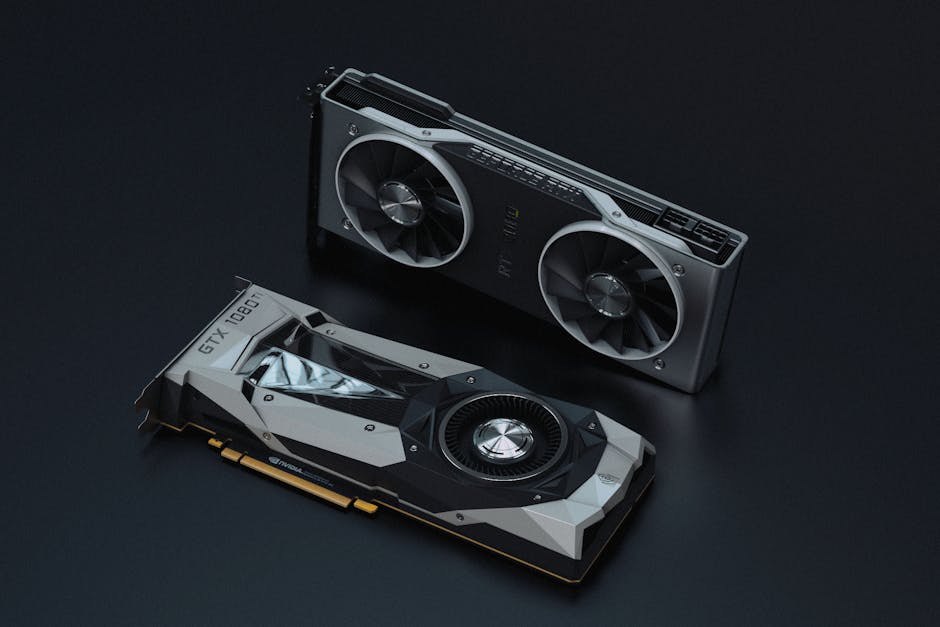
Graphics Processing Units are the true workhorses when it comes to rendering modern games. These specialized processors are designed to handle thousands of simple, repetitive tasks simultaneously, making them perfect for calculating where every pixel on your screen should go. They excel at performing the massive amount of mathematical operations required to project 3D shapes onto your 2D monitor.
Modern GPUs do much more than just map shapes; they also handle complex lighting effects, particle systems, and surface textures. They use highly optimized hardware circuits to manage things like shadow depth and surface reflections. Without these powerhouses, the complex visual fidelity we enjoy in current gaming would be entirely impossible to achieve in a real-time environment.
The Complex Pipeline Behind the Scene
The journey from a digital model to a visible pixel is known as the rendering pipeline, and it follows a strict sequence of steps. First, the engine determines which objects are visible to the camera, discarding anything hidden from view to save processing power. Then, the vertices of the 3D models are transformed from a local coordinate system into the screen space you actually see.
Once the scene is structured, the pipeline moves on to rasterization, where it calculates how these 3D shapes translate into 2D pixels. Finally, fragment shaders determine the color, brightness, and texture of each individual pixel based on material properties and lighting conditions. This entire sequence happens in milliseconds, ensuring that the visual output matches the internal game state perfectly.
Rasterization vs Ray Tracing Techniques
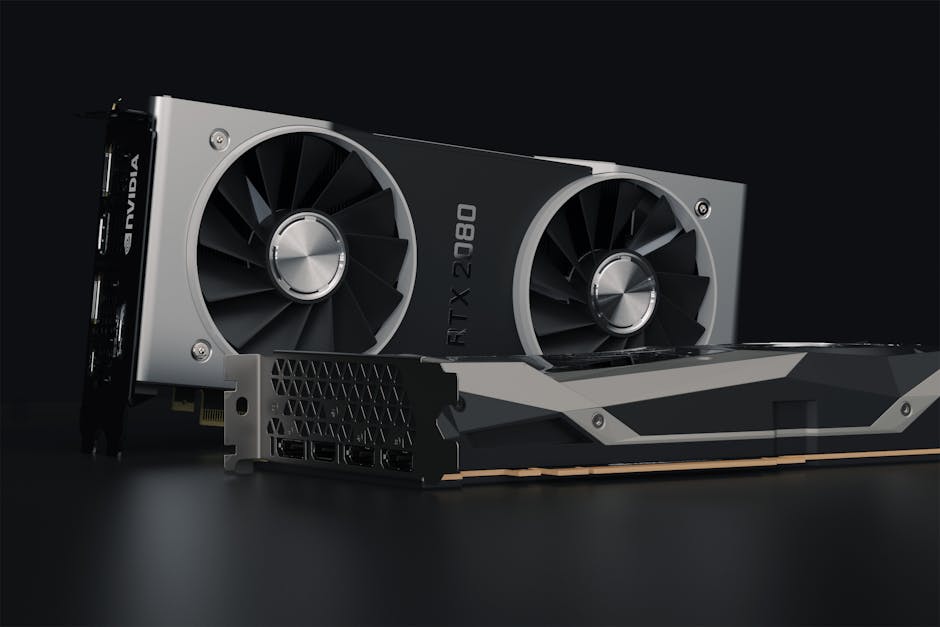
For years, rasterization has been the dominant method for rendering games because it is exceptionally fast and efficient. It approximates how light might look by applying textures and basic lighting calculations to triangles that make up 3D objects. However, it can struggle with complex, realistic lighting behavior like accurate reflections or soft shadows.
Ray tracing is a more advanced technique that simulates the actual physical behavior of light by tracing the path of light rays as they bounce through a scene. This approach creates incredibly realistic visuals but is also much more computationally expensive. Many developers now use a hybrid approach to get the best of both worlds:
- Rasterization is used for the bulk of the scene's geometry to maintain high performance.
- Ray Tracing is selectively applied to specific elements like reflections, shadows, or ambient occlusion to add visual realism.
- AI Upscaling, such as DLSS or FSR, helps bridge the performance gap by rendering at lower resolutions and reconstructing the image intelligently.
Why Speed and Frame Rate Define Gameplay
Frame rate is arguably the most critical metric for judging how well a game is rendering. It measures how many frames the computer can produce per second, with higher numbers usually resulting in smoother, more responsive gameplay. A low or unstable frame rate creates noticeable stuttering that can ruin immersion and even make the game harder to play.
High frame rates also significantly reduce input lag, which is the time between moving your mouse and seeing the result on the screen. For fast-paced genres like shooters or racing games, this responsiveness is absolutely essential for competitive play. Achieving a consistent, high frame rate is the primary goal for both developers optimizing their games and players choosing their hardware.

Optimization Strategies for Smooth Performance
Because rendering power is limited, developers must use clever optimization techniques to keep performance high without sacrificing too much quality. One common method is Level of Detail (LOD), which reduces the complexity of 3D models as they get farther away from the camera. The player rarely notices these changes, but they drastically reduce the workload for the GPU.
Another crucial technique is occlusion culling, where the engine refuses to render objects that are completely blocked from view by other geometry. If a wall is in front of a tree, there is no need to waste resources drawing that tree. These seemingly simple tricks are vital for maintaining the visual complexity while keeping the game running smoothly on various hardware configurations.
The Future Evolution of Real Time Rendering
The future of rendering is becoming increasingly intertwined with artificial intelligence. Instead of trying to calculate every single pixel, developers are using AI to predict and fill in the missing details, allowing for higher resolutions and more complex scenes. This technology allows games to look better than the raw hardware power would normally allow, effectively extending the lifespan of gaming consoles and PCs.
As AI becomes more advanced, it will likely take over more tasks related to light estimation and material simulation. This shift promises even more realistic environments with less performance penalty, pushing the boundaries of what is possible in interactive media. The goal is to reach a point where virtual worlds are indistinguishable from reality, and we are moving closer to that horizon every year.