How Real Time Multiplayer Works In Mobile Games
The Invisible Engine Powering Modern Mobile Gaming
Ever wonder how you can sprint alongside a friend on the other side of the planet while playing your favorite mobile shooter? The experience of real-time multiplayer on a mobile device feels like magic, but it is actually a carefully engineered feat of networking, physics, and data management. Behind every smooth movement and instant reaction lies a complex sequence of events ensuring that what you see on your screen matches what your friend sees on theirs.
Achieving this level of synchronization is incredibly difficult, especially on mobile devices that rely on fluctuating wireless networks. Developers must design games that can handle inconsistent data speeds while maintaining a fair and immersive environment for everyone involved. Understanding how this process works reveals just how impressive these tiny, pocket-sized experiences truly are.
The Foundations of Real-Time Multiplayer Networking
At the heart of any connected experience is the networking architecture, which defines how data travels. Most fast-paced mobile games utilize a client-server model rather than connecting players directly to one another. In this setup, your smartphone acts as the client, sending your inputs to a central server that processes the game state for all participants.
The server acts as the absolute authority, maintaining the "true" state of the game world to prevent cheating and ensure fairness. It receives data from every player, calculates the results of actions like shots or movements, and broadcasts the updated information back out. This centralized approach is critical because it ensures that no single player can manipulate the game to gain an unfair advantage.
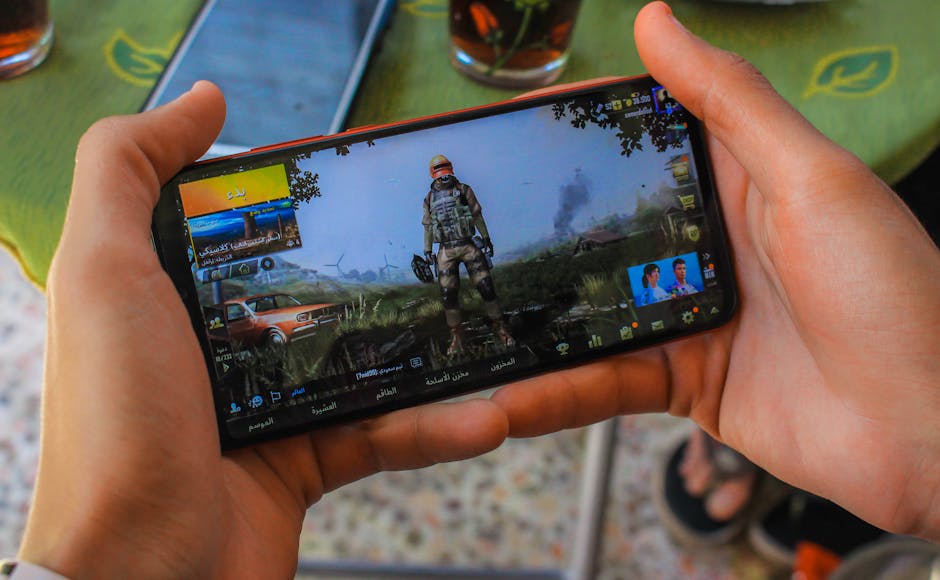
Conquering the Challenge of Latency
Latency, or the time it takes for data to travel from your phone to the server and back, is the biggest enemy of real-time multiplayer. On mobile networks, this delay is unpredictable because data packets might take different paths or get stuck in congested nodes. Even a tiny delay can make a game feel unresponsive, turning a crisp competitive experience into a frustrating slide show.
To combat this, developers focus heavily on minimizing data packet sizes and optimizing how often the game updates. They also use specialized networking protocols designed for speed rather than total reliability. In these games, it is often better to lose a single packet of information occasionally than to force the entire game to pause while waiting for that lost data to be retransmitted.
Smart Techniques for Maintaining Smooth Gameplay
When network delays are inevitable, developers employ clever visual tricks to maintain the illusion of instant action. Techniques like client-side prediction allow your game to immediately show the results of your actions, such as walking forward, before the server even confirms it. If the server eventually disagrees, the game quietly corrects your position, but most of the time, this makes movement feel perfectly responsive.
Another essential tool is entity interpolation, which helps smooth out the movement of other players in the game. Instead of jumping from position to position based on every received update, your phone renders other players by blending their positions over time. This makes their movement appear fluid even when their data packets are arriving at slightly irregular intervals.
- Prediction: Instantly shows your local actions to avoid feeling delayed.
- Interpolation: Smooths out the movement of other players to eliminate jitter.
- Lag Compensation: Adjusts time-sensitive calculations to make sure shots register fairly, even if you or your opponent have higher latency.

Balancing Hardware Constraints and Network Traffic
Mobile devices are vastly different from desktop computers, forcing developers to balance demanding graphics with intensive networking needs. A processor constantly busy with high-fidelity rendering can easily struggle with the rapid-fire calculations required for real-time multiplayer. Efficient code is paramount, as developers must minimize the power usage and heat generated by constant network communication.
This limitation often influences game design choices, such as reducing the maximum number of players in a single match or simplifying physics calculations. Developers must carefully decide which information is truly necessary to send to the server and which can be calculated locally. Finding this balance ensures the game remains playable and enjoyable, even on older or less powerful smartphones.
The Future of Connected Mobile Interaction
The landscape of mobile gaming is shifting rapidly thanks to advancements in infrastructure like 5G and edge computing. By moving servers closer to the end user, edge computing significantly reduces the physical distance data must travel, slashing latency to levels previously seen only in wired setups. These improvements are opening the door for even more complex and immersive multiplayer experiences that were once impossible on mobile.
As cloud gaming technology matures, we will see even more intense experiences streamed directly to devices without needing to process heavy data locally. While the core principles of real-time multiplayer will remain the same, these technological leaps will continue to blur the lines between mobile and desktop gaming. The future of playing together on the go looks faster, smoother, and more connected than ever before.
