Smartphone Camera Innovations Over Time
The Incredible Journey of Smartphone Camera Innovations
Remember when your phone camera was just good enough to capture a blurry moment, usually in perfect daylight? Fast forward to today, and our smartphones have become powerful photographic tools, often rivaling dedicated cameras in many situations. This remarkable transformation is thanks to continuous smartphone camera innovations that have pushed the boundaries of what's possible in a tiny package. It's a fascinating evolution, blending cutting-edge hardware with brilliant software.
From simple snap-and-share devices to sophisticated imaging powerhouses, the progress has been relentless. We've seen a shift from basic functionality to complex computational photography, enabling anyone to capture stunning photos and videos with ease. Let's dive into how these pocket-sized marvels changed our perception of mobile photography.
From Basic Snappers to Megapixel Monsters
In the early days, phone cameras were an afterthought, delivering grainy, low-resolution images. The first camera phones in the early 2000s boasted VGA (0.3-megapixel) sensors, which felt revolutionary at the time. Soon, a megapixel race began, with manufacturers cramming more and more pixels onto tiny sensors, leading to phones with 5MP, 8MP, and then 12MP cameras.
While the megapixel count grew, the actual image quality often struggled in less-than-ideal lighting. Small sensors meant small pixels, which struggled to gather enough light, resulting in noisy photos. This early period, however, laid the groundwork for future advancements, teaching engineers valuable lessons about the limitations and potential of miniature imaging systems.
The Rise of Computational Photography
The real game-changer wasn't just about hardware; it was about software. Computational photography emerged as a superpower for mobile photography, using algorithms to overcome physical limitations. Instead of a single raw image, phones started capturing multiple frames and intelligently combining them.
Features like High Dynamic Range (HDR) became standard, allowing phones to capture details in both the bright and dark areas of a scene, something traditional single-shot cameras struggled with. Panorama mode stitched together multiple photos into a seamless wide-angle shot. Most impressively, Night Mode leveraged these techniques to turn dimly lit scenes into bright, detailed images, redefining low-light performance on a smartphone.

Multi-Lens Magic: A Key to Smartphone Camera Innovations
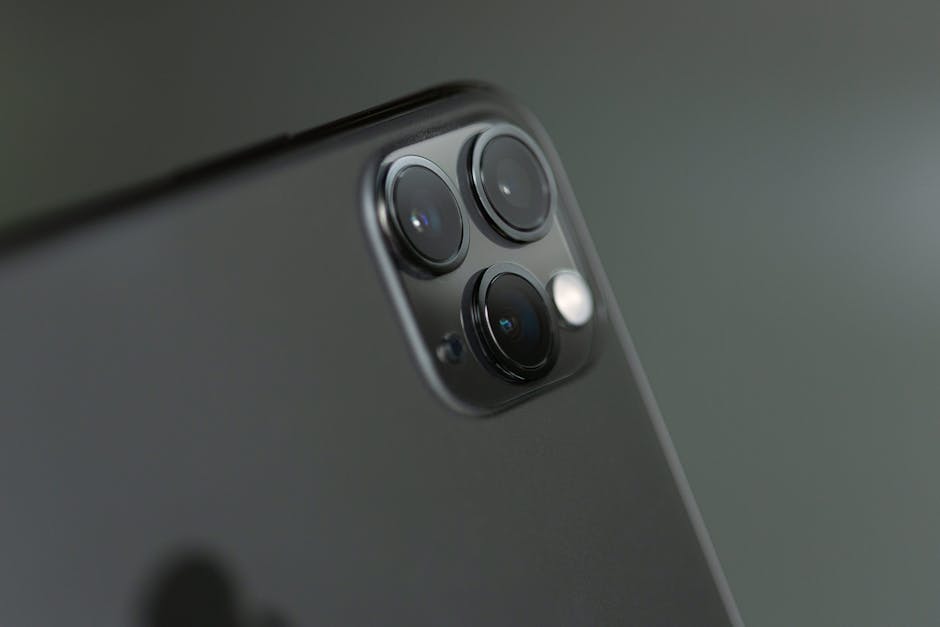
For years, a single lens dominated, but that changed dramatically with the introduction of multi-camera systems. Manufacturers realized that instead of one versatile lens, several specialized lenses could offer far more creative freedom and improve image quality across various scenarios. This marked a significant leap in mobile photography advancements.
Today's phones often feature three, four, or even five lenses, each serving a distinct purpose. This array of lenses gives users unprecedented flexibility, transforming their phones into a complete photography kit.
- Ultrawide Lens: Perfect for expansive landscapes, group shots, and fitting more into the frame without stepping back.
- Telephoto Lens: Enables optical zoom, bringing distant subjects closer without sacrificing detail, unlike digital zoom.
- Macro Lens: Allows for extreme close-up shots, revealing intricate details often missed by standard lenses.
- Depth Sensor (ToF/LiDAR): Primarily used to gather depth information, enhancing portrait mode's background blur (bokeh) and improving augmented reality experiences.
AI's Touch: Smarter Shots, Effortless Beauty
Artificial Intelligence (AI) has become an indispensable co-pilot for your phone's camera. Modern smartphones use AI to analyze scenes in real-time, instantly recognizing objects, faces, and environments like food, pets, or sunsets. Based on this recognition, the AI automatically adjusts settings such as exposure, white balance, and color saturation to produce the best possible shot.
AI also supercharges features like portrait mode, more accurately separating the subject from the background for a professional-looking blur. It can enhance facial features, reduce noise, and even predict motion to improve autofocus. This intelligent automation simplifies complex photography tasks, allowing anyone to capture stunning images with minimal effort.
Beyond Stills: The Video Revolution
While still photography has seen immense strides, video capabilities have also undergone a dramatic evolution. What started as shaky, low-resolution clips has transformed into cinematic-grade footage. Today, most flagship phones can record in 4K resolution, offering incredible detail, and many are now pushing into 8K territory.
Advanced video stabilization, often combining optical image stabilization (OIS) with electronic image stabilization (EIS) and AI processing, ensures smooth, professional-looking footage even when you're on the move. Features like slow-motion, time-lapse, and cinematic modes with variable depth of field put powerful video production tools directly into your pocket, empowering creators to capture their stories in dynamic new ways.
Bigger Sensors, Brighter Pixels, Better Clarity
Despite the physical constraints of a thin smartphone, engineers have continually found ways to improve the actual camera sensor hardware. We're seeing increasingly larger sensors being fitted into phones, which can capture more light and produce better image quality, especially in challenging conditions. Along with larger sensors, technologies like pixel binning have become common.
Pixel binning combines data from several smaller pixels into one "super pixel" during processing. This effectively increases the light-gathering capability and reduces noise, leading to brighter, clearer images in low light, even if it means a lower effective megapixel count for the final photo. Coupled with optical image stabilization (OIS), which physically moves the lens to counteract hand shake, these hardware enhancements deliver consistently sharper and more vibrant photos.
What's Next? The Future of Mobile Photography
The pace of smartphone camera innovations shows no signs of slowing down. We're already seeing periscope lenses enabling unprecedented optical zoom ranges, allowing users to capture subjects from incredible distances. Under-display camera technology, though still maturing, promises truly full-screen experiences without notches or punch-holes, integrating the front camera seamlessly.
Further integration of AI and machine learning will likely lead to even smarter scene analysis, more sophisticated editing capabilities right on the device, and potentially new forms of computational imaging that we can't even imagine yet. The future of phone camera evolution promises even more astonishing ways to capture and share our world.