How Pc Simulation Games Create Realistic Experiences
The Foundation: Physics Engines and Real-Time Calculations
Ever wonder why hours seem to melt away while you are carefully managing a farm, piloting a commercial airliner, or meticulously building a sprawling city on your monitor? It is not just a lucky streak of addictive gameplay or clever design. It is the sophisticated engineering and meticulous attention to detail behind the scenes that make these virtual worlds feel incredibly authentic. Understanding how pc simulation games create realistic experiences is a fascinating journey into the fusion of complex physics engines, deep data processing, and highly refined sensory design. This combination convinces your brain—and your senses—that you are truly immersed in another reality.
Physics engines are the absolute foundation and the unsung heroes in the world of high-fidelity simulations. They calculate gravity, friction, mass, and air resistance in real-time, dictating how a vehicle handles or how water flows down a simulated riverbed. Without these complex, robust mathematical models, the virtual world would feel hollow, lifeless, and fundamentally disconnected from the player's inputs.
Immersion Through Visual Fidelity and Sound Design
Visual fidelity, while vital, goes far beyond simply having high-resolution textures and fancy shaders. It is truly about the interplay of lighting, shadows, and complex weather effects that respond realistically to the player's presence and actions. When sunbeams break through a dense canopy of trees in a nature simulation, it is the result of advanced, real-time ray tracing that mimics real-world light behavior and scattering.
Audio also plays a massive, often underrated, role in establishing a truly credible and convincing environment. The sound of a heavy diesel engine under load, the soft rustle of dry leaves in the wind, or the distant, layered ambient hum of a busy city is carefully designed to ground the player in the setting. When these high-quality audio cues perfectly match the visual input, the immersion becomes near-absolute, tricking the senses into believing the virtual space is real.

Why Understanding How PC Simulation Games Create Realistic Experiences Matters
Recognizing the immense effort developers put into these titles dramatically enhances your appreciation for the entire medium. When you know that the behavior of the wind in a complex flight simulator is mapped to real-world meteorological data, you stop seeing it as a simple, arbitrary game mechanic. You begin to understand it as a complex, living system that challenges your skills and demands genuine learning.
This heightened awareness also helps players choose the right hardware to fully experience what developers have built. It shifts the perspective entirely, changing it from simply playing a game to actively interacting with a sophisticated, tailored environment specifically designed to mimic or extend reality. When you play with purpose and knowledge of the underlying systems, the realism becomes even more pronounced.
The Crucial Role of Meaningful Player Agency
Simulation games thrive on giving players meaningful, high-stakes choices that have lasting, tangible consequences. In a dense city-building or complex management simulation, your calculated decisions about resource allocation and infrastructure directly impact the growth and stability of your entire virtual population. It is not about following a scripted, pre-determined path, but about reacting quickly and intelligently to an evolving situation you helped create through your choices.
This sense of agency is absolutely crucial for authenticity because it mirrors real-world decision-making processes. You are consistently forced to weigh complex pros and cons, manage scarce resources, and anticipate future problems before they become critical. This kind of intense cognitive demand keeps players deeply engaged and invested, making the virtual experience feel genuinely rewarding and authentic.
The Hardware That Transforms Virtual Worlds
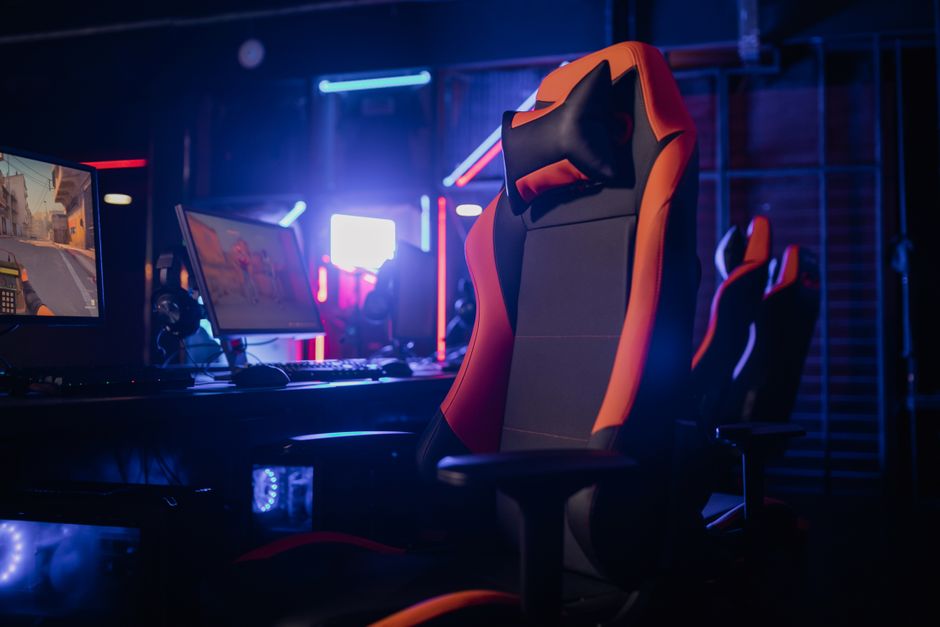
The specific hardware you choose to use significantly impacts your ability to suspend disbelief and fully embrace the simulation. Specialized controllers allow for a level of precise, nuanced input that standard mouse and keyboard configurations simply cannot replicate. Consider how these essential tools enhance the simulation:
- Flight Yokes and Rudder Pedals: These provide a physical, intuitive, one-to-one mapping for steering and navigation in aviation simulators, mimicking real aircraft controls.
- Racing Wheels with Force Feedback: You actually feel the texture of the road, the subtle vibration of the engine, and the resistance of the tires during a tight cornering maneuver.
- VR Headsets: These completely replace your peripheral vision with the game world, creating an unparalleled sense of physical presence and depth that flat screens struggle to match.
- Sim Racing Seats and Cockpits: These provide the physical sensation of being inside a vehicle, grounding your body in the simulated environment.
The Future of AI-Driven Simulation Technology
We are only just beginning to see how advanced artificial intelligence and machine learning can push the boundaries of simulation. Future simulations might soon feature non-player characters that do not just follow pre-set behaviors, but actually learn and adapt to your unique, evolving playstyle. This could create scenarios that are truly unpredictable, further blurring the line between a programmed game and a living reality.
Furthermore, the seamless integration of real-time cloud data is bringing unprecedented levels of accuracy to weather, traffic, and global market simulations. As this technology continues to mature, the environments we play in will become increasingly accurate representations of our own complex world. The possibilities for depth, complexity, and sheer authenticity are constantly expanding, promising even more breathtaking, realistic experiences in the coming years.
The Psychological Power of Authentic Virtual Spaces
Beyond the technical aspects, there is a deep psychological component to why these experiences feel so real. Simulation games often encourage a state of flow, where the challenge level perfectly matches the player's skill, leading to deep focus. When the environment is authentically rendered, this focus is intensified, making time seem to disappear.
The feeling of accomplishment in a simulation is often tied to mastering real-world skills within a safe, virtual space. Whether it is learning to land a plane or mastering the logistics of a supply chain, the skills learned feel transferable and valid. This validates the time spent, reinforcing the perception that the simulation is not just a diversion, but a meaningful pursuit.