The Evolution Of Battlefield Communications From Wires To Encrypted Radio
Tracing the Evolution of Battlefield Communications
The history of warfare is fundamentally linked to how quickly and accurately commanders can share information with their troops. The evolution of battlefield communications is a fascinating journey that highlights how technological breakthroughs directly shape the success of missions on the ground. It has transformed from relying on physical infrastructure that was easily severed, to invisible, hardened digital networks that now define modern tactical superiority.
This shift has been driven by a constant struggle between necessity and vulnerability. Militaries have always sought faster, more reliable ways to send orders, while adversaries have worked just as hard to intercept or disrupt those messages. Understanding this trajectory shows how innovation is rarely just about speed, but about maintaining the security of data in hostile environments.
From Telegraph Keys to Frontline Wires
Early large-scale combat relied heavily on visual signals like flags, lanterns, or runners carrying handwritten notes across dangerous terrain. The introduction of the telegraph changed this dynamic entirely by allowing near-instantaneous transmission across vast distances for the first time. It was a massive leap, but it required extensive physical infrastructure that was surprisingly fragile.
Once telegraph cables were laid, they became the indispensable backbone of military command and control. However, these lines were slow to install and highly vulnerable to enemy sabotage, making them unreliable in fast-moving combat scenarios. Commanders constantly struggled with the physical limitations of these systems, especially when they were needed most urgently.

The Radio Revolution During World War I
The dawn of the twentieth century brought wireless telegraphy, which eventually evolved into practical radio sets during World War I. This technological leap meant that communication was no longer tethered to a physical wire, providing unprecedented freedom for commanders on the front lines. Soldiers could finally receive orders without needing a direct cable connection to headquarters.
Despite this massive improvement, early radio equipment was cumbersome, unreliable, and difficult to operate in trenches or moving vehicles. It was a chaotic period where the technology matured rapidly under extreme pressure. Radio proved that mobility in command was possible, even if the hardware was still in its infancy.
The Dangers of Unprotected Airwaves
While radio broke the tether of wires, it introduced the massive risk of enemy interception. Because radio signals transmit in all directions, anyone with a receiver and the right tuning could listen in on sensitive tactical discussions. The battlefield became an open book, where the enemy could gain real-time insights into troop movements, supply shortages, or impending attacks.
This reality forced a rapid shift in how military information was handled during combat. Intelligence officers realized that simple, open-air transmissions were a recipe for disaster. The era of secure signals intelligence had begun, and militaries were forced to adapt or lose the element of surprise entirely.
Early Tactics in Tactical Encryption
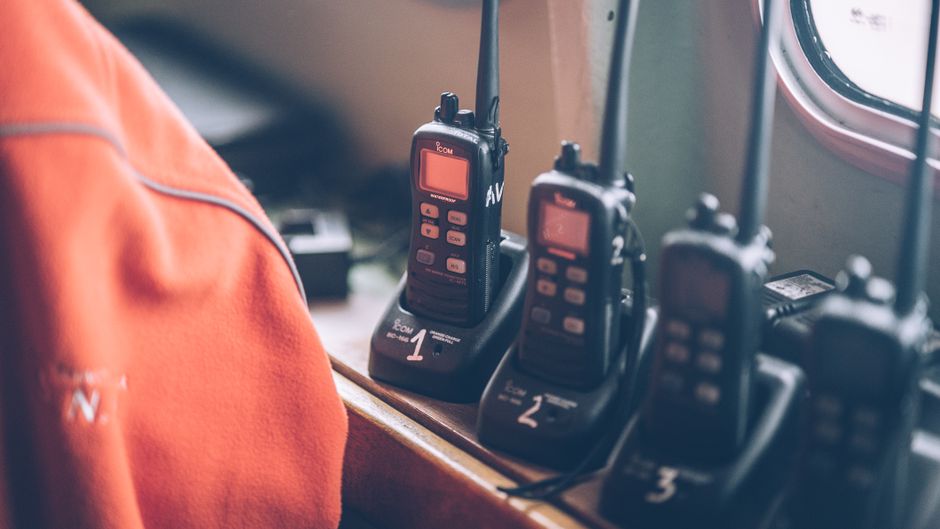
To combat the threat of eavesdropping, militaries began implementing rudimentary codes and ciphers to disguise their radio transmissions. This was the start of true encryption in a tactical setting, moving beyond simple shorthand to complex, albeit manually intensive, systems. It required trained operators who could quickly encode and decode messages under heavy fire.
These early methods, while effective against basic interception, were not infallible and required significant time to process. The core challenge became balancing the need for absolute security with the absolute necessity of speed. If a message took too long to encrypt or decrypt, it was functionally useless in a fluid combat situation.
The Digital Leap and Networked Warfare
The digital revolution changed the game by automating encryption and allowing for high-speed, secure data transmission. Modern radios now act more like portable, hardened computer terminals than traditional voice-based sets. They can transmit not just encrypted voice, but detailed maps, video feeds, and real-time status updates across protected channels.
This networked approach has drastically improved situational awareness for commanders. They can now visualize the battlefield in ways that were unimaginable just a few decades ago, thanks to these advanced capabilities. Several key components enable this modern level of security:
- Frequency Hopping: Radios rapidly switch frequencies, making it nearly impossible for an enemy to jam or track the signal.
- End-to-End Encryption: Data is encrypted at the source and only decrypted at the final destination, protecting it during transit.
- Hardened Network Protocols: Digital systems are built to withstand electronic interference and combat damage that would disable traditional systems.

Ensuring Resilience in Modern Combat
Current secure military networks prioritize resilience above all else, ensuring that connectivity remains intact even when segments of the network are compromised. Developers now build systems that can self-heal and dynamically route traffic around disabled nodes. This ensures that command and control can function despite intense electronic warfare and deliberate interference.
Looking ahead, the focus continues to shift toward integrating artificial intelligence to further enhance both the security and speed of these transmissions. The goal remains the same as it was in the era of wire telegraphy: getting the right information to the right place at the right time. The tools have changed drastically, but the fundamental tactical necessity has never wavered.