The Role Of Neural Networks In Modern Artificial Intelligence
Understanding the role of neural networks in modern artificial intelligence
Neural networks have quietly become the hidden engine behind almost every digital interaction we experience. From the instant suggestions in your search bar to the sophisticated voice assistants on your smartphone, the role of neural networks in modern artificial intelligence is fundamental to how machines now interpret and interact with our world. These systems represent a massive departure from traditional, rigid programming, allowing software to learn and adapt in ways that feel strikingly closer to human cognitive processes.
Unlike conventional software that relies on hard-coded rules, these advanced systems learn from experience and patterns, essentially teaching themselves how to solve complex tasks. By mimicking the structure of the human brain, they process information through layers of interconnected nodes, refining their accuracy with every single input they receive. This ability to learn from vast amounts of data has turned them into the backbone of current technological advancements.
The biological inspiration behind digital intelligence
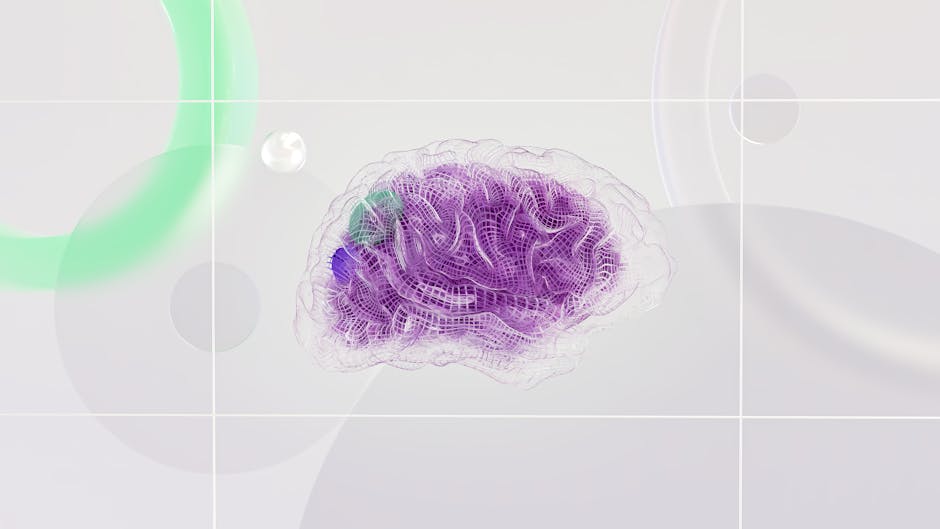
Think of neural networks as simplified, mathematical models designed to mimic how human brain neurons communicate. At their core, they consist of organized layers—an input layer, several hidden layers, and an output layer—that pass information back and forth. When data flows through these layers, each node assigns a specific weight to the information, adjusting these weights as the network identifies what is relevant and what is just noise.
This structure is highly effective because it allows the system to break down immense, unstructured datasets into manageable insights. As data traverses the network, the machine learns to identify complex patterns, such as the subtle nuances in a human voice or the specific pixel arrangement that constitutes a recognizable object in a photograph. This process is how machines have moved from simply calculating numbers to genuinely perceiving data.
Transforming how we process complex data
Traditional algorithms struggle when they encounter messy, unpredictable information because they require explicit instructions for every possible scenario. Because the real world is inherently chaotic, those older methods could not scale effectively as data volumes grew. Neural networks thrive here because they are designed to find hidden relationships within massive, sprawling datasets that no human could ever manually map out or program for.
This capacity to handle high-dimensional, complex data is precisely what makes them so valuable for predictive analytics and pattern recognition. Whether it is analyzing market trends, predicting weather patterns, or even identifying fraudulent financial transactions, these models excel by filtering through noise to find meaning. By training on enormous datasets, they learn to generalize their findings, allowing them to make intelligent predictions on information they have never encountered before.
Practical applications in your everyday life
You probably interact with this technology dozens of times throughout a normal day without even realizing it. These networks are integrated into the services and devices we depend on to simplify our lives, manage our information, and keep us connected. Here are a few ways they show up:
- Smartphones use these systems to recognize your face instantly for secure, hands-free unlocking.
- Streaming services analyze your viewing habits to provide personalized recommendations for shows you might actually enjoy.
- Real-time translation tools interpret spoken or written text, breaking down language barriers with incredible speed.
- Diagnostic software assists medical professionals by identifying potential health issues in complex medical imagery like X-rays.

The evolution from simple models to deep learning
The leap from early, shallow models to modern deep learning has completely redefined what artificial intelligence can achieve. By stacking many hidden layers—the "deep" in deep learning—researchers have enabled machines to understand complex, hierarchical concepts. This capability allows the system to build its understanding from simple shapes or sounds into high-level features like context, intent, or artistic style.
This depth is what enables current AI models to grasp nuances that were previously completely unreachable. It is not just about matching keywords anymore; it is about understanding the semantic meaning behind human communication and visual imagery. As these architectures grow more sophisticated, their ability to reason through intricate problems continues to improve significantly.
Navigating challenges and ethical limitations
Despite their incredible power, these models are not without significant limitations and challenges that require careful consideration. The most prominent hurdle is their absolute dependence on massive quantities of high-quality, diverse data. If the training data contains inherent biases, the network will inevitably learn and reproduce those biases in its outputs, which leads to serious ethical problems in automated decision-making.
Furthermore, the black box nature of these models makes them notoriously difficult to interpret or explain. Even the researchers who build them often struggle to determine exactly why a model reached a specific conclusion, which is problematic in high-stakes fields like medicine or law. Building trust in these systems requires finding ways to make their decision-making processes more transparent and accountable.

Looking ahead at the future of AI architectures
The field is already moving toward more efficient and specialized network designs that aim to reduce the massive energy consumption currently required. Future developments will likely focus on creating lighter, faster models capable of running directly on personal devices rather than relying heavily on centralized cloud infrastructure. This shift would enhance speed and protect user privacy while maintaining the high performance we expect.
The intersection of computing power and innovative algorithm design will continue to reshape what is possible for years to come. By moving beyond rigid, rule-based systems, we have unlocked a future where machines do more than just process—they understand. This evolution ensures that the technologies we depend on become more helpful, intuitive, and seamlessly integrated into the fabric of our daily routines.