Why Stealth Technology Makes Modern Aircraft So Difficult To Detect
Understanding How Stealth Technology Changes Air Warfare
Modern military aviation relies heavily on the ability to operate undetected within contested airspace. This capability is primarily achieved through stealth technology, a complex fusion of engineering, material science, and design philosophies. Rather than simply hiding, these aircraft are engineered to minimize their visibility to the various sensors that enemy forces use to track them.
The goal of this design approach is not total invisibility, which remains physically impossible, but rather to delay detection long enough to complete a mission. By making an aircraft appear significantly smaller on radar, or by reducing its thermal and electromagnetic emissions, stealth aircraft create massive challenges for defenders. This fundamental shift in design has revolutionized how air superiority is contested in modern conflicts.
The Mechanics of Radar and Detection
To understand why these planes are so hard to spot, one must first understand how traditional radar works. Radar systems function by emitting radio waves that travel through the air, bounce off distant objects, and return to a receiver. The time it takes for those waves to return allows the system to calculate the object's distance, while the Doppler effect helps determine its speed and direction.
Conventional aircraft act like giant mirrors, reflecting those radio waves back to the source in a clear, unmistakable pattern. This gives them a large radar cross-section, which essentially dictates how "loudly" the plane appears on a radar screen. Stealth design focuses entirely on manipulating this interaction to deny the radar system the data it needs to form a track.

Designing Shapes to Deflect Radar Waves
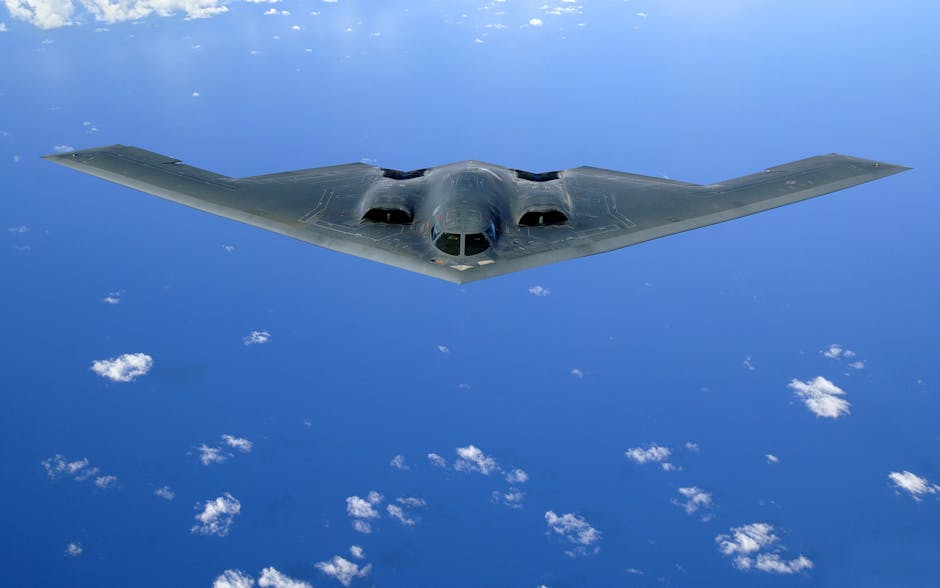
The most recognizable aspect of low observable aircraft is their unique, often angular geometry. Engineers meticulously design airframes to ensure that when radar waves hit the surface, they are scattered in directions away from the original transmitter. By using sharp angles and flat, faceted surfaces, the plane effectively "tricks" the radar into seeing something that isn't there.
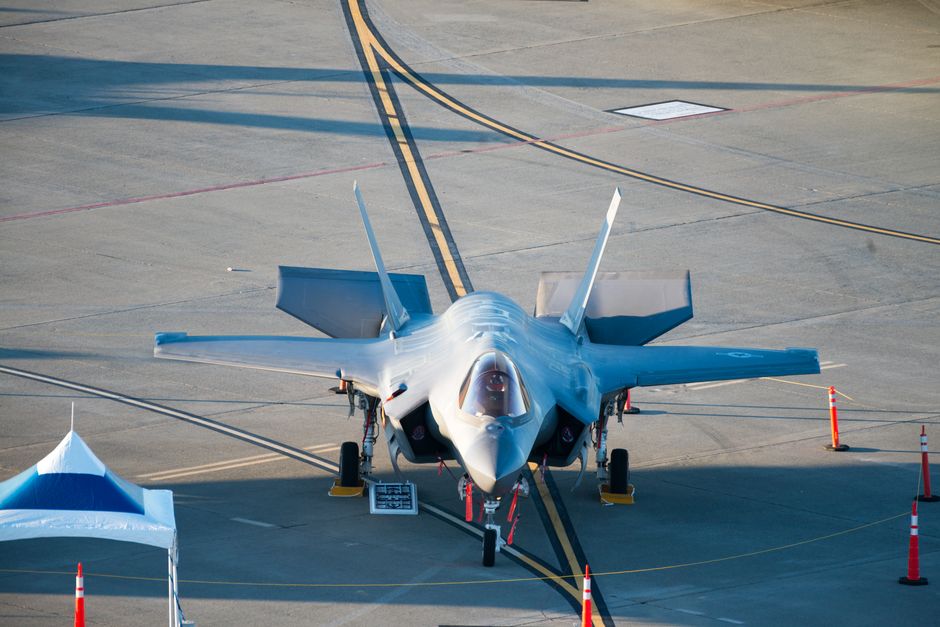
This design philosophy extends to the integration of various components that are typically major sources of radar reflection on traditional planes. For example, engine inlets are often S-shaped to hide the turbine blades, while weapons are stored internally rather than on external pylons. These design choices ensure that the aircraft does not present a single, massive reflection point to incoming electromagnetic energy.
The Role of Radar-Absorbent Materials
While shape is vital, geometry alone cannot hide a modern jet from every angle and frequency. This is where specialized Radar-Absorbent Materials, commonly known as RAM, become absolutely critical. These advanced coatings and structural materials are designed to absorb electromagnetic energy rather than reflecting it back into the sky.
When radar waves hit an aircraft treated with these materials, the energy is converted into heat at the microscopic level within the coating. This absorption process drastically reduces the radar signature, making the plane appear much smaller, often akin to a bird or even an insect on a radar display. The combination of clever shape design and advanced material science is what truly makes a jet difficult to detect.
Managing Heat to Fool Infrared Sensors
Radar is not the only way to track an aircraft, and advanced air defense systems also rely heavily on infrared sensors. These systems detect the significant heat signature produced by a jet's engines and the friction of air moving over the airframe at high speeds. To counter this, stealth aircraft incorporate several advanced infrared reduction techniques:
- Engine nozzles are often flattened to mix hot exhaust gases with cooler ambient air more rapidly.
- Internal engine configurations keep the hot components shielded from ground-based sensors.
- Advanced coatings are used on the airframe to reduce heat buildup caused by aerodynamic friction.
Maintaining Silence Across the Electromagnetic Spectrum
Stealth is not just about avoiding detection; it is also about preventing the aircraft from revealing itself through its own transmissions. A jet broadcasting strong radio signals, active radar pulses, or even constant communication pings acts as a beacon for passive sensors. Consequently, stealth aircraft are designed to operate under strict electronic silence.
Modern avionics suites allow these planes to operate in a "passive" mode, where they can gather vast amounts of information about their environment without emitting a single signal that would give away their position. By controlling their own electromagnetic footprint, these aircraft ensure that they remain as "quiet" as possible while navigating through hostile territory. This disciplined approach to electronic emissions is a cornerstone of effective low observable operations.
The Never-Ending Evolution of Detection Technology
The relationship between stealth aircraft and detection systems is a continuous, high-stakes arms race. As stealth capabilities improve, defenders develop more sensitive radar, better data processing to detect minute anomalies, and multispectral sensors that look for combinations of signatures. Detection is rarely a single-sensor challenge in modern environments; it is about combining data from radar, infrared, and electronic surveillance.
Ultimately, the effectiveness of stealth technology relies on maintaining a cumulative advantage across all these domains. The goal is to make the cost and effort of detection so prohibitively high that the aircraft can operate with a high degree of confidence. While detection technology will never stop evolving, the fundamental principles of minimizing signatures ensure that these aircraft remain a powerful tool in any modern air force.