How Industrialization Brought Mass Production To Modern Weapon Systems Design
The Industrial Shift in Weaponry
Historically, the crafting of weaponry was a slow, artisan-driven process defined by individual skill and limited throughput. The move into the industrial age fundamentally altered the capacity for production, reshaping how nations prepared for defense and conflict. Understanding how industrialization brought mass production to modern weapon systems design is essential to grasping the nature of global conflict and technological advancement today. This critical technological leap turned limited, boutique armories into massive, automated production networks capable of outfitting entire armies in record time.
This transformation did not happen overnight, but rather emerged from a necessity for speed, reliability, and scale. By moving away from custom fabrication, militaries could ensure that their tools of defense were available whenever and wherever they were needed most. The resulting efficiency redefined the relationship between industrial capability and military power on the world stage.
From Craftsmanship to Precision Components
Before factories took over, weapon design relied heavily on individual blacksmiths and gunsmiths who operated in small, localized workshops. Each vital part was painstakingly hand-fitted, making every single rifle or cannon essentially unique and difficult to replicate. This chronic lack of uniformity meant that maintenance and critical repairs in the field were nearly impossible, often requiring the original craftsman to personally fix the equipment.
The industrial transition began with a deliberate move toward standardized, interchangeable parts. Precision machine tools allowed manufacturers to create complex components that fit perfectly across entirely identical platforms. This massive shift effectively removed the need for manual hand-filing of parts, which drastically increased manufacturing output and accelerated critical supply chains.

The Standardization Revolution
Standardization became the backbone of this defense transformation, ensuring that components were universally compatible. By adopting uniform specifications, manufacturers could guarantee that a firing pin from one rifle would fit another perfectly, regardless of when or where it was produced. This reduced the time needed for repairs and allowed soldiers to swap parts in the field with minimal training or specialized tools.
Military leaders pushed hard for these standards to ensure consistency across their forces and reduce reliance on fragile supply lines. With uniform parts came the ability to rapidly train personnel on maintaining those systems without requiring deep, expert knowledge. The logistical nightmare of unique, custom-made gear began to vanish, replaced by efficient and reliable alternatives that were far easier to manage.
Assembly Lines in Defense Manufacturing
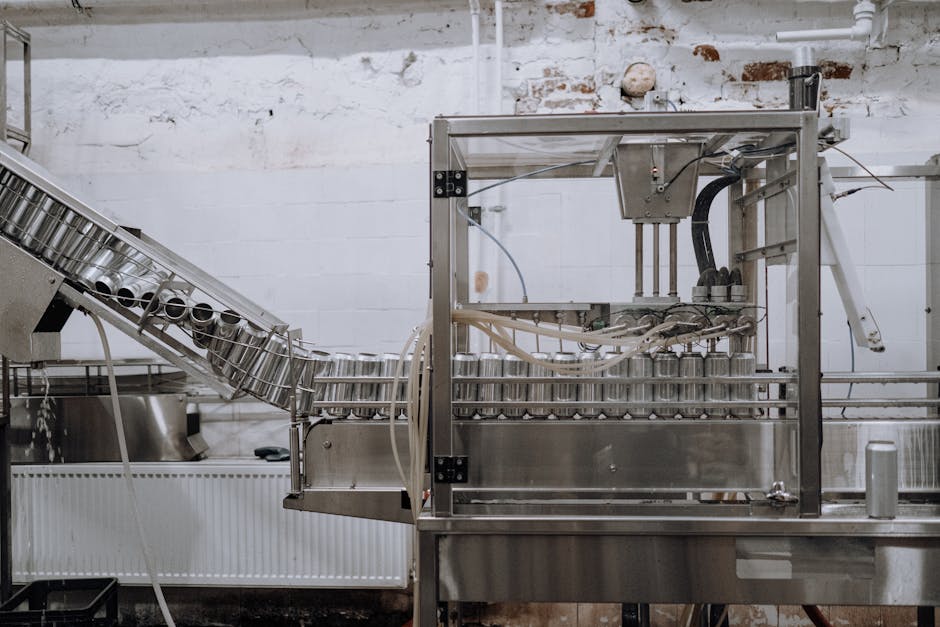
The introduction of the moving assembly line revolutionized defense manufacturing just as it did the early automotive industry. Rather than a small team working on one weapon from start to finish, specialized workers performed specific tasks along a conveyor system. This innovative approach allowed for the constant, rapid output of sophisticated weaponry that simply was not possible under older, manual models.
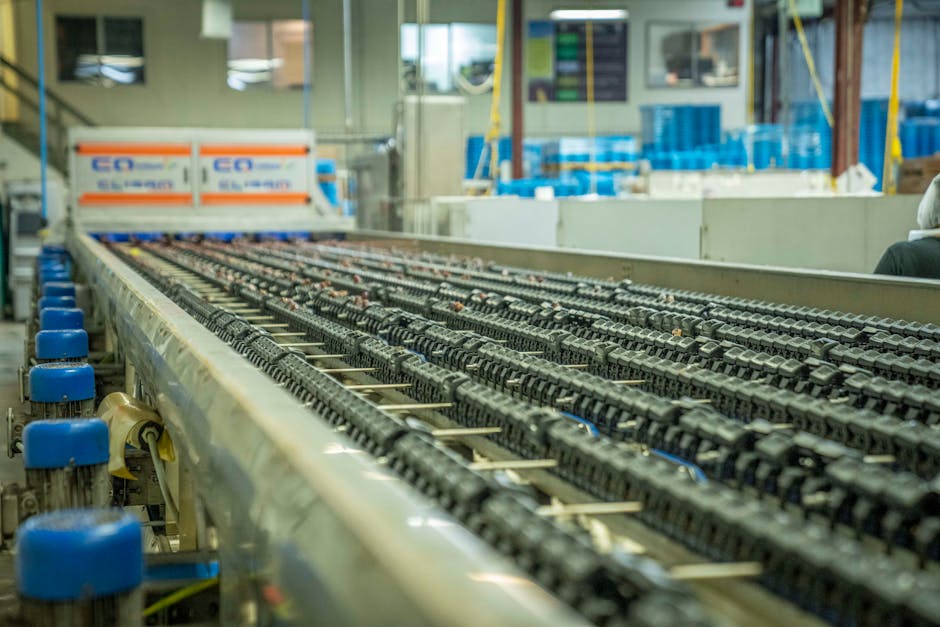
This process significantly reduced downtime in industrial facilities. Specialized, heavy machinery could be dedicated to a single, repetitive task, while human operators focused on installing components as they passed by. It meant that instead of producing dozens of weapons a month, facilities could churn out thousands, fundamentally transforming military capability on a global scale.
- Increased output speeds for essential gear and munitions
- Reduction in human errors through task specialization
- Efficient use of raw materials through optimized, automated processes
How Industrialization Brought Mass Production to Modern Weapon Systems Design
It is fascinating to observe how industrialization brought mass production to modern weapon systems design by integrating new chemical and metallurgical advancements. These innovations allowed for the creation of much more durable, lethal, and cost-effective materials on a massive, repeatable scale. Suddenly, nations possessed the capacity to equip millions of soldiers, rather than relying on small, elite professional armies that were costly to maintain.
Factories rapidly became the true centers of military power. The ability to churn out standardized components meant that complex supply chains could be simplified and expanded across entire continents. Modern weapon systems were no longer just designed for raw combat performance; they were designed specifically for manufacturability, ensuring they could be built quickly and reliably under intense pressure.
Scaling Complexity for Global Conflicts
The crushing demands of global conflict forced nations to scale up their production capacity to unprecedented levels. During both world wars, the rapid conversion of civilian factories into weapon production plants showcased this newfound capability. Design processes had to adapt to accommodate this mass manufacturing requirement, prioritizing extreme simplicity and assembly speed over delicate, overly complex designs.
As weapon systems became more complex over time, factories adapted by creating highly modular designs. These modules could be assembled independently by different departments and then seamlessly integrated into the final product. This modularity allowed manufacturers to scale up or down production based on the shifting needs of the military without having to completely redesign entire weapons platforms.
Digital Transformation and Future Systems
Today, the legacy of industrialization lives on through sophisticated CAD software and advanced automated robotics. Precision engineering is now handled by digital systems, ensuring perfect, sub-millimeter accuracy in every component produced on the factory floor. The core principle remains the same as it was during the industrial revolution: creating complex, reliable systems as efficiently and accurately as possible.
Looking ahead, the focus is rapidly shifting toward additive manufacturing, or 3D printing, for critical defense systems. This new phase of production promises even more flexibility and speed in the manufacturing process. It represents the next logical step in the long evolution of how we design and build the tools of defense, continuing the clear trend toward total automation and precision.