How Wartime Nuclear Research Influenced Modern Energy Production Methods
The Origins of Atomic Power
It is easy to forget that the foundations of modern power generation were forged in the crucible of global conflict. Much of our current understanding of atomic energy stems directly from wartime nuclear research, a period characterized by intense, rapid-fire scientific breakthroughs.
While the initial focus was purely on military application, the discoveries made in physics and chemistry during the 1940s fundamentally changed our technological landscape. This massive mobilization of talent and resources created a blueprint for how humanity handles nuclear material, setting the stage for everything that followed in the civilian sector.
Yet, the legacy of that era extends far beyond weaponry or simple physics. It reshaped the way we approach large-scale energy projects and established the core infrastructure we rely on today.
The Manhattan Project's Scientific Legacy
The Manhattan Project remains perhaps the most significant scientific endeavor in history. It required physicists and engineers to solve unprecedented challenges related to isotope separation and nuclear chain reactions at an industrial scale.
These massive challenges forced scientists to pioneer new methodologies in experimental design and data interpretation. The sheer speed at which they moved turned theoretical physics into actionable engineering realities, a transition that remains essential for modern energy innovation.
Many of the fundamental principles regarding neutron behavior and radioactive isotopes were codified during these years. By mastering these reactions, they unknowingly created the necessary technical library for future power reactors.

Accelerating Advanced Engineering Capabilities
The urgency of war demanded that scientists and engineers develop systems that were not only effective but incredibly reliable under pressure. This requirement for extreme durability and precision directly informs the safety standards required in modern energy production.
Engineering teams had to invent new materials and manufacturing processes to handle intense radiation and heat. These innovations are the direct ancestors of the specialized alloys used in today's nuclear power plants to ensure the long-term integrity of the reactor core.
The rigorous testing protocols and quality control measures developed during this time became standard practice in high-stakes energy engineering. Without these early, forced advancements, the infrastructure of the energy industry would look drastically different.
Shaping How Wartime Nuclear Research Impacts Modern Energy
The influence of wartime nuclear research on modern power is most evident in the development of the light water reactor. The early studies on moderated chain reactions directly paved the way for the pressurized water designs that supply electricity to millions today.
This period taught us how to effectively extract heat from fission, which is the core concept behind all nuclear power production. Translating that process from a laboratory setting to a functional, grid-connected power plant was the ultimate challenge, and it utilized every lesson learned during the preceding decade.
We continue to refine these concepts, but the fundamental architecture of modern nuclear power remains deeply tethered to those original discoveries. It is a striking example of how technical knowledge, born from necessity, creates lasting impacts on everyday life.
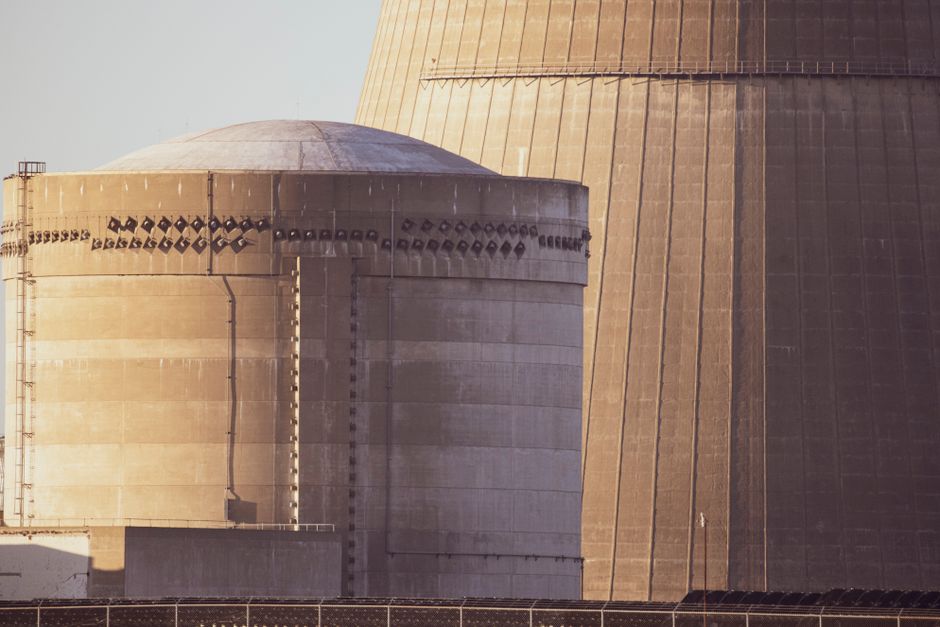
Civilian Transition and Reactor Development
Following the war, the shift from military to civilian use was not merely a change in purpose but a fundamental shift in scientific mindset. Researchers began to view nuclear fission as a potential source for steady, reliable, and clean electricity.
Early experimental reactors were often built using designs that were technically related to those used in the production of plutonium. Engineers modified these systems to operate at lower pressures and temperatures, focusing on stability rather than just production capacity.
This period of development was essential for transforming a technology perceived only as dangerous into a viable utility. It laid the foundation for the regulatory bodies that now oversee energy production worldwide.
Advancing Computational Modeling and Simulation
Nuclear research during the war necessitated early methods of computation to predict complex physical outcomes. Since physical testing was extremely dangerous and costly, scientists were forced to rely on theoretical models to estimate what might occur within a reactor core.
This reliance on mathematical prediction birthed the field of computational physics. Modern energy engineers now utilize highly advanced digital simulations that are direct descendants of these early efforts to model neutron flux and heat distribution.
The ability to accurately simulate reactor behavior before breaking ground is now the standard across the industry. This predictive power allows for more efficient, safer, and better-optimized designs, saving both time and resources during the planning stages of new projects.

Safety, Regulation, and Material Science
Working with nuclear materials taught the world hard, necessary lessons about containment and radiation protection. Early projects did not have the benefit of hindsight, and mistakes in handling materials drove the development of the strict protocols used in energy production today.
The engineering requirements to contain radioactive material successfully led to innovations in shielding and waste management. These advancements ensure that modern energy facilities can operate with a high degree of confidence and security.
Several key areas were significantly impacted by this focus on safety:
- Shielding materials that utilize high-density concrete and lead to protect workers.
- Redundant control systems, designed to stop reactors automatically during anomalies.
- Standardized protocols for handling, transporting, and storing radioactive waste products.
- Continuous monitoring of environmental impacts, ensuring operational safety for nearby communities.
Lessons Learned for a Sustainable Energy Future
Looking back at how these early efforts shaped our current energy landscape reveals a clear pattern. Innovation rarely happens in a vacuum, and the technologies we depend on often have complex, sometimes paradoxical, origins.
The challenge for future energy production is to take the reliability and scale established decades ago and integrate it with new, sustainable practices. We are currently applying the same spirit of innovation to develop fusion energy, which promises to revolutionize power generation once again.
Learning from history allows for more mindful development as we continue to push the boundaries of energy science. We carry the knowledge gained from that era into a future defined by a greater commitment to safety and environmental stewardship.