The Evolution Of Armor Piercing Ammunition For Modern Main Tanks
The Eternal Struggle Between Protection and Penetration
The history of tank warfare is defined by a relentless competition between better armor and more capable weaponry. Since the first armored vehicles rumbled onto the battlefield, engineers have scrambled to design armor piercing ammunition for modern main tanks that can defeat increasingly sophisticated defensive measures. This ongoing arms race ensures that tank technology never stands still, as every breakthrough in protection eventually forces a counter-innovation in firepower.
Understanding this evolution requires looking beyond simple physics, as it involves a delicate balance of material science, ballistics, and tactical requirements. Early tanks relied on thick steel, but as armor became more resilient, the ammunition needed to change its fundamental approach. This shift moved from brute force to refined, high-energy penetrators designed to focus massive kinetic force on a tiny surface area.
From Solid Steel to Sabot
In the early decades of tank development, armor piercing rounds were essentially solid, heat-treated steel projectiles designed to punch through plating via sheer mass. As armor thickness increased, these solid shots became ineffective, often shattering upon impact rather than penetrating. Engineers needed a way to deliver more energy without simply making the projectile impossibly heavy and slow.
The solution arrived in the form of sabot technology, which allowed a smaller, denser penetrator to be fired at extremely high velocities. By surrounding a small, rod-like projectile with a lightweight carrier—or sabot—that falls away after leaving the barrel, the tank gun can achieve muzzle velocities that solid shot could never reach. This was the first major leap toward the efficiency required for armor piercing ammunition for modern main tanks.

Understanding the APFSDS Revolution
While early sabot rounds were a major improvement, they suffered from stability issues, which limited their effective range and accuracy. The answer was to incorporate fin stabilization, leading to the Armor-Piercing Fin-Stabilized Discarding Sabot, or APFSDS, round. This design utilizes small fins at the rear of the penetrator to keep it flying straight, allowing for much longer, thinner rods that can focus their entire impact energy on a single point.
These rounds fundamentally changed tank combat, turning modern main battle tanks into true sniper platforms capable of destroying targets from several kilometers away. The combination of high velocity and aerodynamic stability allows these penetrators to retain a vast amount of energy, even after flight. It is this specific combination of features that remains the backbone of anti-armor capability today.
Materials Driving Performance in Armor Piercing Ammunition for Modern Main Tanks
The effectiveness of an APFSDS round depends not only on its shape and velocity but also on the density and physical properties of the penetrator material. Designers look for materials that can withstand the intense heat and pressure of firing while remaining rigid upon impact. This requirement has led to the use of some of the densest materials known to science.
Manufacturers generally choose between two primary materials for these high-performance penetrators, each with its own advantages:
- Tungsten Alloys: These are incredibly dense and offer excellent hardness, making them a popular choice for many nations due to their availability and lack of radioactivity.
- Depleted Uranium: Known for its self-sharpening characteristic, this material actually becomes pointed during penetration, allowing it to punch through armor more effectively than many alternatives.
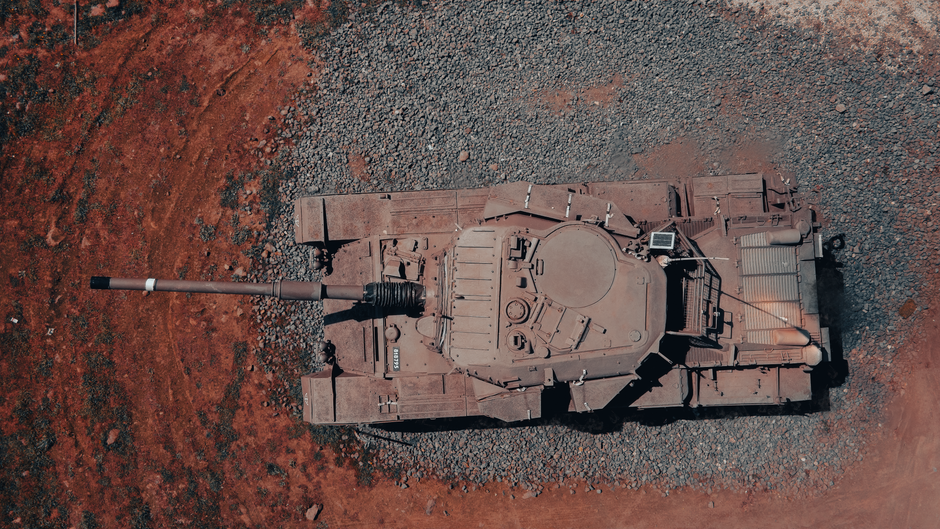
Why Velocity and Density Matter
Kinetic energy is the primary mechanism for defeating armor, and the formula for this energy is heavily weighted toward velocity. Doubling the mass of a projectile doubles its kinetic energy, but doubling its velocity quadruples it, making speed the most critical factor for penetration. This is why armor piercing ammunition for modern main tanks is engineered to prioritize velocity above all else.
Density is equally critical, as a denser penetrator concentrates more mass into the same volume, which helps it maintain momentum during the chaotic penetration process. When a high-density, high-velocity rod hits thick armor, the resulting pressures are so extreme that both the armor and the rod behave almost like fluids for a fraction of a second. The goal is for the rod to retain its structural integrity while the armor is displaced and shredded.
Tactical Considerations in Modern Combat
Modern tank commanders must account for more than just the raw penetration power of their ammunition when engaging threats. The battlefield is crowded with various defensive layers, including explosive reactive armor, spaced armor, and active protection systems. Selecting the right round for the specific threat is essential for success in complex engagement scenarios.
Operators are often trained to consider the secondary effects of penetration, such as spalling, where the inside of the tank armor fragments and destroys the internal components and crew. Because modern armor is so varied, the tactical use of specialized rounds continues to evolve, focusing on ensuring that the kinetic energy is translated into the most catastrophic damage possible upon successful entry.

The Future of Tank Killers
As we look forward, the competition between ammunition and armor shows no signs of slowing down, with new technologies promising to push the limits even further. Emerging designs are exploring concepts like guided kinetic penetrators, which could theoretically adjust their flight path to hit weak points on a moving target. Other research is focused on electromagnetic railgun technology, which could achieve velocities far beyond what conventional chemical propellants can provide.
The core philosophy of armor piercing ammunition for modern main tanks will likely remain centered on kinetic energy delivery, but the methods for achieving it will become more sophisticated. Integration with advanced fire control systems, sensors, and even networked battlefield data will make future ammunition more capable and deadly. Ultimately, the quest for the perfect armor-piercing round is a journey that will continue to reshape the battlefield for decades to come.