The Rise And Fall Of Armored Knights In Medieval Warfare
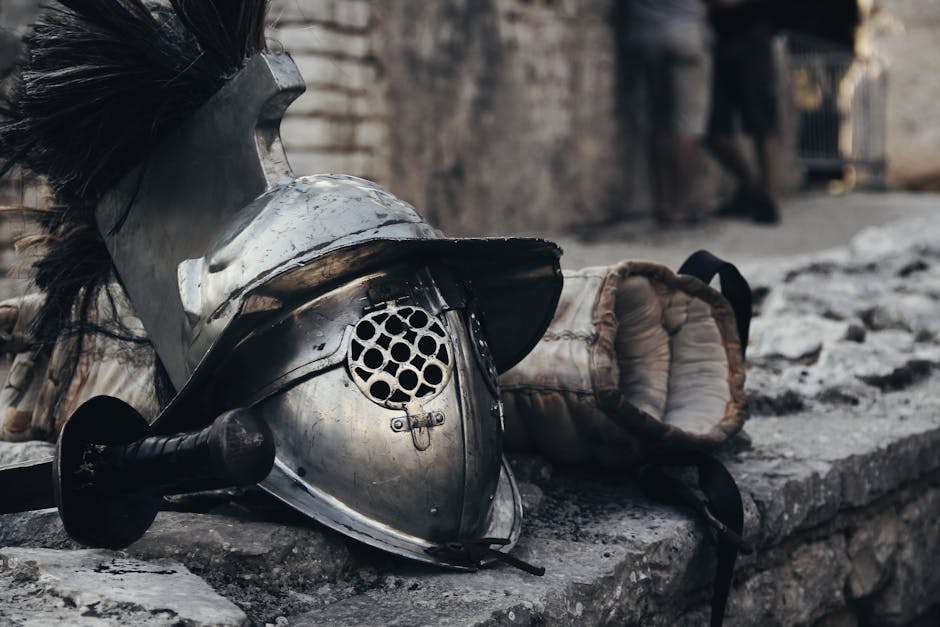
The story of combat on horseback is defined by dramatic shifts in technology and battlefield tactics. When we explore the rise and fall of armored knights in medieval warfare, we witness a profound transformation that shaped nations and redefined social hierarchies for centuries. It was not merely about the intricate armor itself, but rather how these elite figures dominated the battlefield before eventually meeting their match against emerging military technologies.
The image of a knight in shining armor is iconic, yet the reality was a constantly evolving struggle for protection and dominance. Knights represented a specific class of warrior, tethered to complex systems of feudalism and honor, which dictated their role in society. Understanding their journey reveals how military necessity constantly drives human innovation.
As the centuries progressed, these warriors faced new challenges from infantry and gunpowder that rendered their heavy protection obsolete. This evolution illustrates the broader trend of how military superiority is temporary, shifting rapidly as new defensive and offensive methods emerge. The era of the armored knight remains a fascinating study in the inevitable cycle of military adaptation.
Understanding the Rise and Fall of Armored Knights in Medieval Warfare
The rise of the knight was closely tied to the development of the stirrup, which allowed a rider to brace firmly against the impact of a lance charge. This technological improvement turned horsemen into mobile shock weapons capable of breaking infantry formations with devastating efficiency. As their importance grew, these elite warriors became the centerpiece of feudal armies across Europe.
The knight was much more than a soldier; they were a symbol of authority and a pillar of the landed nobility. Their specialized training began in childhood, ensuring they were proficient in weaponry, riding, and the tactical nuances of mounted combat. This high level of specialization made them incredibly expensive to maintain, limiting their numbers but maximizing their impact on the field.
By the high medieval period, the knight had firmly established themselves as the master of the European battlefield. Their presence could decide the outcome of a conflict, often serving as the strategic reserve that tipped the balance during critical engagements. This dominance persisted for centuries, supported by a social structure designed to sustain their expensive lifestyle and equipment requirements.
The Evolution of Protective Gear and Defense
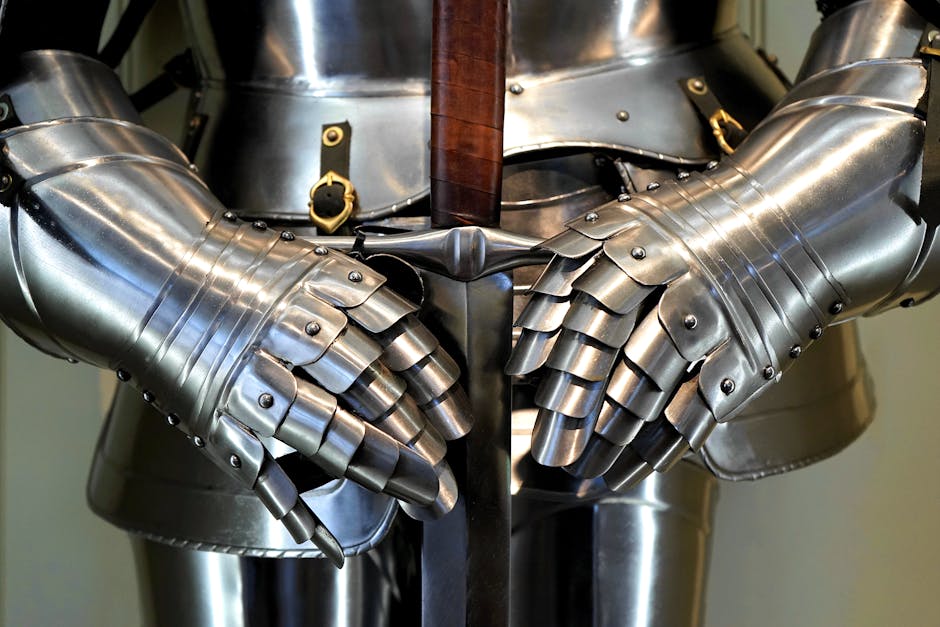
Armor underwent a massive transformation to counter increasingly deadly weaponry, evolving from simple mail to complex plate protection. Chainmail offered flexibility but provided limited protection against crushing blows or pointed arrows that could penetrate the links. This spurred the adoption of steel plates to better deflect strikes and protect vital organs.
As blacksmithing techniques improved, armor became more robust, eventually covering the knight from head to toe in articulated steel. This specialized equipment was designed to be as functional as possible, allowing for surprising mobility despite the weight. However, this level of protection was also a burden, making the knight susceptible to exhaustion during long battles in the heat.
- Mail hauberks provided foundational protection but were vulnerable to piercing weapons.
- Plate armor offered superior defense against arrows and sword strikes through deflection.
- Padding, such as gambesons, was essential beneath steel to absorb shock from impacts.

Tactics and the Mastery of Mounted Combat
The primary tactical advantage of the knight was the shock charge, a coordinated movement designed to smash through enemy lines. This required immense discipline and control to ensure that the entire cavalry unit moved as one cohesive force. When executed correctly, the force of the impact was almost impossible for infantry to withstand.
Beyond the initial charge, knights were trained in various combat maneuvers, including flanking and pursuit. They adapted to different terrains, learning to maneuver their horses effectively to exploit weaknesses in the enemy formation. This tactical flexibility ensured that they remained a formidable force even when the initial charge did not immediately win the battle.
Communication on the battlefield was crucial for these maneuvers, often relying on signals and flags to coordinate movements. Knights operated in small groups, or lances, which allowed for better local control and faster responses to changing conditions. This combination of individual skill and group cohesion formed the backbone of medieval cavalry tactics.
New Threats to Heavy Cavalry
While the knight reigned supreme for centuries, the emergence of disciplined infantry units began to challenge their dominance. The longbow, particularly in the hands of English archers, proved that massed archery could devastate cavalry from a distance. Knights suddenly found themselves vulnerable before they could even close the gap to engage in melee combat.
Pike formations also created insurmountable barriers for horses, which naturally refused to charge into a wall of sharpened wooden shafts. When infantry learned to hold their ground and work in unison, the effectiveness of the shock charge was significantly diminished. This shift forced cavalry to become more cautious, changing the way they approached battles.
The increasing professionalization of armies meant that common soldiers were better equipped and better led. Peasants and mercenaries were no longer just cannon fodder, but key components of a complex tactical environment. This professionalization eroded the unique status of the knight as the sole decider of military conflict.
The Impact of Gunpowder on the Battlefield
The arrival of firearms marked the beginning of the end for the traditional armored knight. Early gunpowder weapons, such as hand cannons and later arquebuses, could punch through armor that had previously been impenetrable. This technological leap rendered the expense of high-end plate armor increasingly difficult to justify for many nobles.
Artillery also became much more effective, capable of destroying fortifications and breaking up cavalry charges from far away. The battlefield was becoming noisier, deadlier, and harder to control, which favored large formations of infantry over the individual prowess of the knight. The knight could no longer rely on armor alone to protect them from the realities of modern warfare.
These new weapons changed the nature of combat entirely, favoring ranged firepower over close-quarters engagement. As gunpowder tech advanced, battles became less about the individual skill of a few elite fighters and more about the synchronized fire of thousands of soldiers. This change shifted the power dynamic permanently away from the mounted knight.
The Legacy of the Medieval Knight
Although the era of the armored knight came to a close, their influence on history and culture remained profound. The ideals of chivalry, though often idealized, created a framework of behavior that shaped Western societal norms for generations. Even after they ceased to be effective combatants, the aesthetic and cultural significance of the knight persisted.
The shift from the knight to professional standing armies allowed nations to centralize power more effectively. This transition contributed to the development of modern military structures, where training and equipment were standardized for the entire force. The end of the knightly era was a necessary precursor to the development of early modern military power.
Today, the figure of the knight continues to captivate the imagination in literature, film, and historical study. Their story is a reminder of how technology drives change and how even the most established elite can be undone by innovation. It is a compelling narrative that highlights the constantly shifting landscape of human conflict.