Why Pikemen Became The Ultimate Counter To Heavy Cavalry Charges
The Changing Face of Medieval Combat
Picture a thundering line of armored knights charging across a medieval battlefield. For centuries, this was the pinnacle of martial power, seemingly unstoppable and destined to dominate every conflict. However, a massive shift occurred in late medieval warfare when pikemen became the ultimate counter to heavy cavalry charges, changing the face of combat forever. This development forced generals to completely rethink their strategies, proving that sometimes the simplest tool is the most deadly.
The Reign of the Knight
The mounted knight was the undisputed tank of the Middle Ages. With heavy steel armor, high-impact lances, and superior speed, they dominated open fields with ease. Infantry often struggled to hold ground against such overwhelming, crushing momentum.
Commanders relied heavily on their armored cavalry to break enemy lines quickly. This supremacy lasted for centuries, creating a culture where mounted combat was the only respected, glorious way to wage war. For many, the idea of an infantryman defeating a mounted noble was entirely unthinkable.
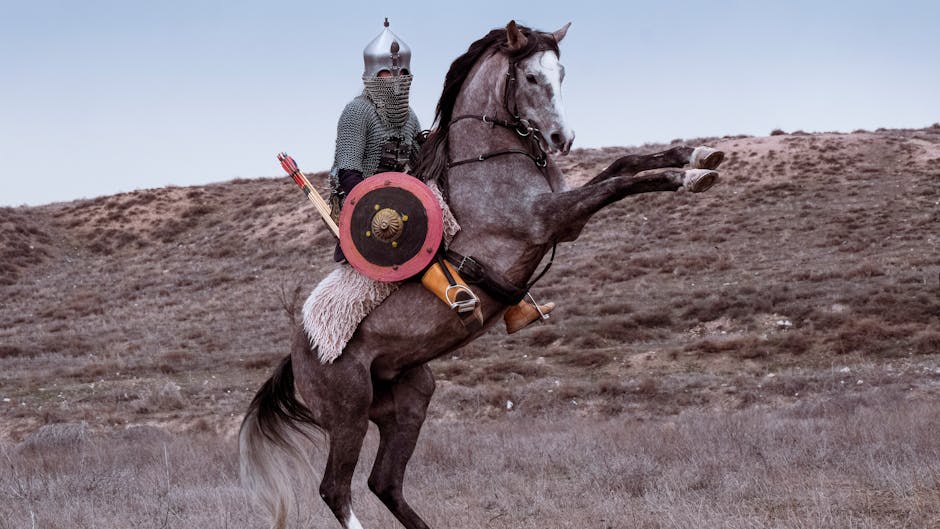
How Pikemen Became the Ultimate Counter to Heavy Cavalry Charges
The widespread introduction of long, sturdy pikes finally provided infantry with a reliable answer to the knight's heavy lance. By creating a dense, impenetrable wall of sharp points, soldiers could effectively negate the momentum of an approaching horse. It was an elegant, simple, and remarkably effective military technology.
When pikemen became the ultimate counter to heavy cavalry charges, the balance of power shifted dramatically on the field. Knights were suddenly forced to reconsider their traditional, head-on tactics against disciplined, massed infantry. It was a shocking and terrifying reality for the established military elite to face, as their long-standing tactical advantage dissolved in the face of massed pikes.
The Psychology of the Horse
Horses are intelligent animals, but they are fundamentally creatures of flight and survival. They generally refuse to charge directly into a solid, impenetrable wall of sharp, wooden shafts, no matter how much they are encouraged. This psychological barrier was absolutely essential to the success of the pike's effectiveness.
A warhorse naturally seeks to avoid intense pain and immediate danger. When confronted with a dense, bristling forest of sharp pikes, even the best-trained, most expensive horse would instinctively hesitate or veer away. This critical moment of hesitation broke the momentum of the charge, leaving the rider completely exposed and vulnerable to the waiting infantry.

The Discipline of Formation
Individual soldiers armed with spears were easily run down by cavalry and posed little real threat. The secret to success was the formation itself, which required intense training and unwavering, collective discipline. Every soldier in the unit had to stand their ground even when faced with the absolute terror of a thundering, charging horse.
The Swiss developed these defensive tactics to perfection, creating massive, deep, and seemingly impenetrable squares. Key elements included:
- Maintaining a tight, interlocking defensive perimeter that no horse would dare enter.
- Reacting as a single, cohesive unit rather than as separate, panicked combatants.
- Providing continuous, overlapping coverage to protect against sudden flanking maneuvers.
- Remaining completely calm while the ground literally shook under the impact of the enemy.
Evolution of Weaponry and Tactics
Pikes were not just simple wooden sticks; they were precision-engineered tools of defense. Significantly longer than a standard spear, they allowed soldiers to keep the horse and rider at a distance where they could not effectively swing their swords or use their own lances. This critical reach advantage was fundamental to the infantry's sudden dominance.
Infantry commanders also began adapting their battlefield positions, making them much more sophisticated. By expertly utilizing natural terrain, such as hills, rocky outcrops, or muddy ground, they severely limited the movement options for cavalry. This forced the charging cavalry into highly disadvantageous positions, right into the prepared teeth of the waiting pikemen.

The Fall of the Mounted Elite
As the use of the pike became the new standard, the dominant role of the armored knight began to decline rapidly. The enormous cost of maintaining armor, breeding and training horses, and constant drill was no longer yielding the same battlefield results it once did. The noble class was forced to painfully adapt to this new reality or watch their historical dominance fade into memory.
This transition marked a critical turning point in military history. Warfare moved decisively away from individual knightly heroics toward massed, coordinated infantry tactics. The era of the common soldier, armed with simple yet effective tools, had finally arrived, permanently altering the social structure of armies.
The Lasting Impact of the Pike
The success of the pike paved the way for later, more advanced infantry innovations and military science. It proved once and for all that well-trained, disciplined soldiers could defeat the most prestigious and expensive warriors of the time. This major tactical shift laid the necessary foundation for modern military organization and professionalization.
Even as emerging gunpowder weapons eventually replaced the pike on the battlefield, the lessons learned remained incredibly relevant. The focus on disciplined, rigid formations and complex infantry cooperation became a core staple of all subsequent military training. The lasting legacy of the pike is firmly cemented in how we understand the evolution of battlefield dynamics.