Why Microwave Ovens Were A Direct Result Of Wartime Research
The Surprising Origins of Microwave Ovens
Most people glance at their kitchen counter and see a simple, humdrum appliance ready to heat leftovers or defrost dinner. It is easy to overlook that microwave ovens are actually the direct result of intense, high-stakes wartime research conducted during the 1940s. This transformation from military surveillance technology to a kitchen staple is one of the most fascinating stories in modern engineering history.
The journey from the radar systems of World War II to our modern countertops was paved with accidental discoveries and rapid technological advancements. What began as a classified project to protect nations eventually revolutionized how we approach food preparation on a daily basis. By examining this history, we gain a new appreciation for the humble device that simplifies our lives.
Understanding the connection between military ingenuity and domestic convenience reveals how interconnected these two worlds truly are. While the technology was initially designed for defense, its transition into the home highlights the unexpected and lasting benefits of scientific investment. We are effectively living in a world shaped by the ingenuity that was born from necessity during a time of global conflict.
The Secret Technology Behind Radar
The story begins with the development of radar technology, which was absolutely critical for Allied forces during World War II. Researchers were working on high-powered vacuum tubes known as magnetrons to create radar systems capable of detecting enemy aircraft from great distances. These magnetrons were designed to emit high-frequency radio waves, a concept that was considered cutting-edge technology at the time.
The military needed a way to spot incoming threats before they could be seen or heard by human eyes. Scientists and engineers worked tirelessly to perfect the magnetron, knowing that its success could determine the outcome of many crucial battles. This intense pressure accelerated innovation and pushed the boundaries of electromagnetic science in ways previously unimagined.
The ability to generate and direct these waves with precision was the key to unlocking a new form of communication and navigation. Without the demand created by wartime research, the development of these powerful radio wave generators might have taken decades longer to reach maturity. Instead, the exigencies of the war forced a breakthrough in a matter of just a few years.

A Happy Accident in the Laboratory
Legend has it that an engineer named Percy Spencer, who worked for Raytheon, was standing near an active radar magnetron when he noticed something completely unexpected. He was working on a radar set when he realized that a candy bar in his pocket had begun to melt, despite the room temperature being quite cool. He quickly surmised that the invisible waves were generating significant heat, sparking an idea that would eventually lead to the development of microwave ovens.
Spencer did not dismiss this strange occurrence, but instead began testing the phenomenon with various food items. He reportedly placed popcorn kernels near the tube, and they promptly popped all over the lab, confirming his theory about the potential of these waves. This simple yet profound experiment marked the turning point from a military tool to a potentially transformative household technology.
This moment of curiosity transformed a high-tech military component into the prototype for a revolutionary kitchen device. It is a classic example of how scientific progress often relies on being observant and willing to explore unexpected findings. Spencer's realization bridged the gap between military defense and domestic necessity in a way that forever changed culinary science.
How Wartime Research Shaped Microwave Ovens
It is important to understand how wartime research directly facilitated this leap in domestic technology beyond just the initial discovery. The intense funding and rapid innovation required to support military objectives pushed engineers to refine the magnetron design significantly, making it both more compact and more efficient. This military-grade engineering allowed for the robust radio wave generators that were essential for the early, bulky prototypes that followed.
The infrastructure built to support radar production during the war also provided the foundation for manufacturing the components needed for these early machines. Many of the techniques developed to manufacture magnetrons for radar arrays could be adapted for the mass production of consumer-grade units. Without the supply chains and technical expertise established for military purposes, the development of these devices would have faced insurmountable hurdles.
The research into electromagnetic waves was not just about detection, but also about mastering the physics of these invisible forces. Scientists learned how to manipulate these waves to achieve specific outcomes, a skill set that was directly transferable to designing effective heating chambers. The investment in understanding electromagnetic phenomena during the war provided the essential knowledge base for all future microwave technology.
From Military Tool to Kitchen Appliance
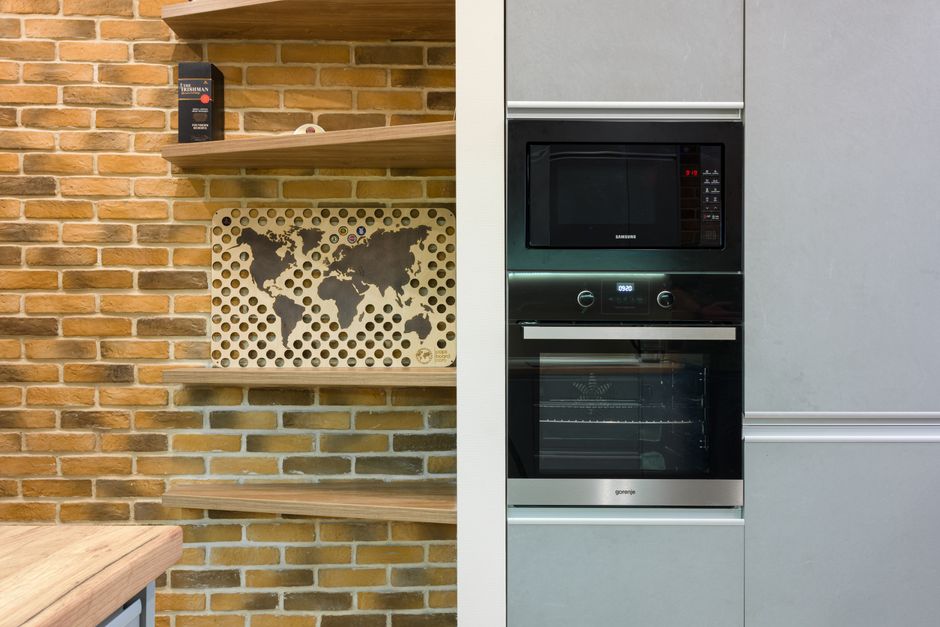
Transitioning this technology to the home was far from an immediate or easy process for the engineers involved. The first commercial units were absolutely massive, incredibly heavy, and prohibitively expensive, making them inaccessible to the average family for many years. It took decades of miniaturization and significant cost-reduction efforts to turn those bulky military radar components into the accessible countertop machines we rely on today.
Designers had to figure out how to safely contain the energy to ensure that the waves were directed only at the food. Early efforts focused heavily on shielding and safety mechanisms, which were vital for convincing the public that this technology was safe for home use. These hurdles required engineers to apply principles learned from military electronics to create a user-friendly and reliable product.
As components became smaller and production methods became more efficient, the cost of these appliances began to drop. This democratization of the technology allowed more families to experience the convenience of fast cooking for themselves. By the 1970s and 80s, the evolution was complete, and these devices had moved from being a luxury curiosity to a standard kitchen requirement.
Understanding How Microwaves Cook Food
How exactly does this technology work once it enters your kitchen to prepare a meal? Microwave ovens function by emitting high-frequency waves that cause water molecules within the food to vibrate rapidly. This rapid, chaotic movement creates friction, which in turn generates the heat needed to cook or reheat items in a matter of seconds.
This process is vastly different from traditional heating methods, which rely on heat transfer through conduction or convection. Because the waves penetrate the food directly, they generate heat internally, leading to much faster cooking times. It is a highly efficient method that minimizes energy loss, making it perfect for quick tasks.
Understanding this mechanism is key to using these appliances effectively for a variety of tasks, from reheating leftovers to defrosting ingredients. While it may seem like a magical process, it is actually a precise application of electromagnetic principles that were first harnessed to track aircraft. The same physics that kept pilots safe now makes our daily cooking routines much easier.

The Lasting Impact of Defense Innovation
The impact of this technology extends far beyond just reheating food quickly. Its efficiency and speed changed culinary habits around the globe, and its influence can be felt in several key ways that define our modern lifestyle:
- Significant reduction in meal preparation time for busy households.
- Improved energy efficiency compared to traditional ovens for small tasks.
- Enhanced ability to thaw frozen food quickly and safely.
- Compact design that fits easily in nearly any kitchen layout.
When we look at our own homes, we are surrounded by technology derived directly from defense industry advancements. The leap from tracking enemy planes to heating up a quick dinner demonstrates how military innovations often find unexpected, peaceful applications. We owe a surprising amount of our modern convenience to the intense ingenuity that was originally intended for the battlefield.
This ongoing legacy serves as a reminder of how quickly scientific developments can move from the front lines of defense to the heart of the home. The story of these appliances is one of adaptation, persistence, and the relentless drive to solve complex problems. By turning wartime research into a household tool, humanity proved that innovation can be harnessed to improve our everyday lives in profound, unexpected ways.