How Touchscreen Technology Changed Mobile Games
Before smartphones and high-resolution displays, gaming was often confined to small, clunky keypads that made complex control schemes feel frustrating and imprecise. The shift toward modern mobile devices fundamentally altered this landscape, and the widespread adoption of touchscreen technology changed mobile games in ways early developers could never have imagined. This massive transition turned the screen itself into the controller, effectively breaking down the barrier between the player and the gameplay experience. It brought a level of intimacy to gaming that was previously impossible, allowing players to engage directly with the digital worlds in their hands.
This development was not merely a change in hardware, but a complete reimagining of what interactive entertainment could be. By removing physical limitations, mobile titles became more accessible, intuitive, and ultimately, more immersive. As we look at the trajectory of this industry, it becomes clear that the way we touch, swipe, and interact with our devices is the cornerstone of modern mobile fun.
The Dawn of Intuitive Gameplay
Suddenly, games did not require complex button combinations or lengthy tutorials to execute simple actions. Instead of memorizing key layouts or struggling with directional pads, players could just interact with the environment directly on their screens. This direct manipulation created an immediate bond between the user and the virtual world.
This immediacy made gaming accessible to a massive, previously untapped demographic. Whether it was slicing falling fruit with a quick swipe or launching characters across a map with a precise flick, the learning curve vanished almost overnight. The technology democratized gaming, ensuring that anyone with a smartphone could jump in and understand the core mechanics within seconds.
How Touchscreen Technology Changed Mobile Games for Developers
For creators, the elimination of physical buttons forced a radical rethink of game design. Developers had to move away from simply porting console games to smaller screens and instead embrace mechanics built specifically for touch input. This required a focus on clarity and simplicity, ensuring that actions felt responsive rather than clunky.
This shift led to innovative UI designs where menus, health bars, and inventory systems were integrated seamlessly into the play area. It was not just about shrinking a console experience to fit a handheld; it was about building something native to the device. By designing around the limitations and strengths of a touchscreen, developers created experiences that felt right at home on a mobile platform.

Mastering Precision with Haptic Feedback
While touch brought undeniable convenience, it initially lacked the satisfying physical "click" of a mechanical button. Haptic feedback bridged this gap by providing subtle, programmable vibrations that mimic physical sensations during gameplay. This technology gives developers a way to provide tangible confirmation for digital actions, making virtual environments feel more real.
This integration allows players to feel the impact of a shot, the tension of a bowstring, or the rumble of a racing engine beneath their tires. It makes digital actions feel tangible, effectively compensating for the lack of real-world hardware. By utilizing these subtle sensory cues, developers have significantly increased the immersion factor of mobile titles.
From Simple Taps to Complex Gestures
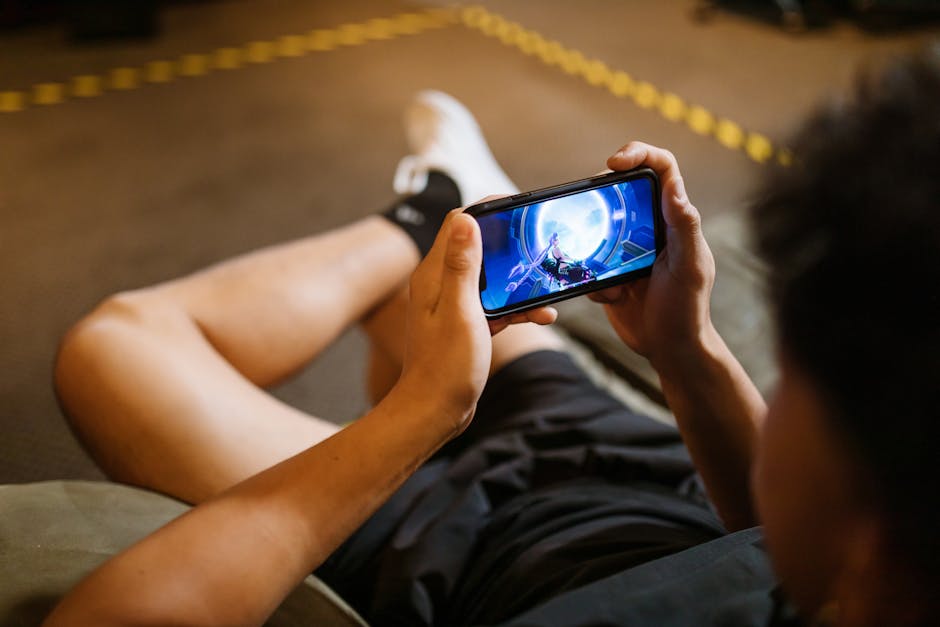
Simple tapping was just the beginning for mobile developers who were eager to push the hardware to its limits. They quickly introduced complex gestures like swiping, pinching, rotating, and multi-touch combinations that added incredible depth to control schemes. These advancements meant that mobile games could offer much more than just simple reflex-based challenges.
These gestures enabled entirely new genres, from intricate strategy games requiring sophisticated camera manipulation to rhythm games that utilize the entire screen surface as an instrument. The hardware evolved, and gameplay followed suit, becoming more strategic and sophisticated. Key interaction types include:
- Swipe mechanics for high-speed action, character movement, and rapid navigation.
- Multi-touch inputs for performing simultaneous actions, such as movement and combat.
- Pinch-to-zoom for detailed world-building, tactical planning, and map exploration.
Accessibility and the New Era of Gaming
One of the most significant impacts of this evolution has been in the realm of accessibility. Touchscreens offer a flexible control interface that can be easily customized to support diverse physical needs. Unlike rigid controllers, a software-based interface can be reconfigured in ways that traditional hardware never could.
Developers can implement adjustable button sizes, on-screen remapping, and even specialized touch configurations to ensure more people can enjoy their titles regardless of ability. This level of inclusivity was incredibly difficult to achieve with standard physical controller hardware, making the touchscreen a vital tool for making gaming a truly universal experience.
The Future of Interactivity
Looking ahead, the integration of screen technology continues to evolve alongside augmented reality and highly advanced sensors. Players are no longer just interacting with a static display, but increasingly blending digital elements with their real-world surroundings. The boundary between the screen and the player is continuing to blur.
As processors get faster and sensors more sensitive, the response time of touch input will reach near-instantaneous levels, making the interaction feel even more organic. We are only just beginning to scratch the surface of how touch, sound, and visual data will merge to create deeply immersive experiences. The potential for innovation remains vast and largely untapped.
A New Frontier for Players
The journey from basic, limited keypad inputs to the fluid, responsive, and highly capable interfaces we enjoy today has been nothing short of rapid. Touchscreen technology changed mobile games from a niche hobby into a universal pastime enjoyed by billions of people around the globe. It has redefined our expectations of what a portable device can do.
The device in your pocket is now a powerful gaming machine that fits seamlessly into your daily life. The possibilities for what comes next continue to expand, ensuring that the mobile gaming revolution is far from over. As technology continues to improve, the way we connect with our favorite virtual worlds will only become more intuitive and more exciting.