How Mobile Game Performance Improved On Smartphones
A decade ago, playing games on a phone meant limited graphics and simplistic mechanics. Today, we hold pocket-sized consoles capable of rendering sprawling open worlds with impressive fidelity. This dramatic shift in mobile game performance has turned smartphones into the primary gaming device for millions of people worldwide.
Understanding how we reached this point requires looking at more than just faster processors. It is the culmination of hardware breakthroughs, software optimization, and innovative engineering designed to deliver smooth experiences on diverse hardware. The journey of enhancing how games run on our devices has been nothing short of revolutionary.
The Hardware Evolution Fueling Better Mobile Game Performance
At the core of every modern smartphone lies the System on Chip, or SoC, which acts as the brain for both processing and graphics tasks. These chips have seen massive leaps in capability, featuring dedicated GPU cores designed specifically to handle complex 3D rendering and shading techniques.
Manufacturers are now prioritizing efficiency alongside raw power, allowing for sustained performance during intense gaming sessions. This hardware focus ensures that even graphically demanding titles can run without excessive stuttering or frame drops, setting a new baseline for what players expect.
Modern mobile processors are also far better at managing memory bandwidth, which is critical for loading textures and assets quickly. By integrating fast RAM directly into the package, the distance data must travel is minimized, leading to snappier interactions and reduced load times.
The Role of Advanced Game Engines
While powerful hardware is essential, the software running on top of it must be equally capable. Industry-standard engines like Unity and Unreal Engine have evolved significantly, offering developers tools that are highly optimized for mobile architectures.
These engines now handle much of the heavy lifting, automatically managing resource allocation and optimizing rendering paths. They allow creators to build stunning worlds that scale effectively across a wide array of devices, from budget-friendly handsets to high-end flagship phones.
Furthermore, these engines provide robust support for modern graphics APIs, which allow developers to communicate more efficiently with the device's hardware. By reducing overhead, games can push more pixels per second, resulting in a more fluid and visually engaging experience.

Tackling Heat for Sustained Gaming
One of the biggest challenges for consistent gaming performance has always been heat management. When a smartphone gets too hot, the system automatically throttles its speed to prevent damage, which can ruin the gameplay experience by causing sudden slowdowns.
Engineers have developed innovative cooling solutions, such as vapor chambers and advanced thermal materials, to dissipate heat more efficiently. These internal components move heat away from the processor and spread it across the body of the phone, allowing it to cool down more rapidly.
By keeping the internal temperature lower, smartphones can sustain higher performance levels for longer periods. This is crucial for competitive titles where even a momentary drop in frame rate can determine the outcome of a match.
The Impact of High Refresh Rate Displays
Visual smoothness is just as important as technical speed, and the rise of high refresh rate displays has fundamentally changed mobile gaming. Many modern devices now feature screens capable of 90Hz, 120Hz, or even higher, which makes motion appear significantly more fluid.
When a game runs at 60 or 120 frames per second on these screens, the interaction feels incredibly responsive and immediate. The connection between touching the display and seeing an action happen on-screen becomes almost instantaneous, enhancing the feeling of immersion.
This leap in display technology has forced developers to optimize their games further to hit these higher frame rate targets. Players now expect consistent, smooth motion, and games that fail to deliver this feel outdated and unpolished.
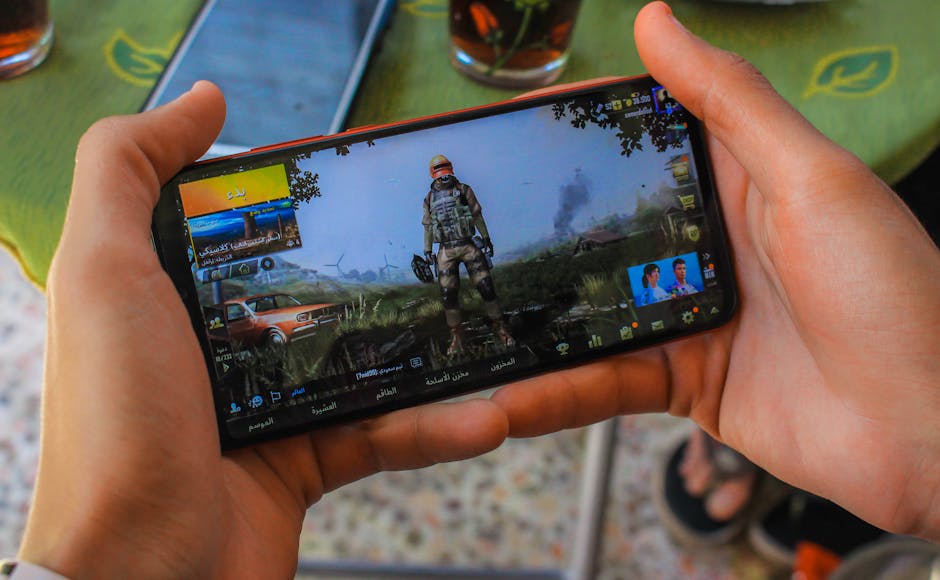
Cloud Gaming and Streaming Technologies
For those times when local hardware is not enough, cloud gaming has emerged as a powerful alternative. By processing the game on remote, high-powered servers and streaming the video to the smartphone, players can enjoy console-quality experiences without worrying about their local device's limitations.
This approach effectively decouples performance from the physical hardware in the player's pocket. As long as the internet connection is fast and stable, the player gets a consistent experience regardless of whether they are using a top-tier flagship or an older model.
While it requires a solid network connection, cloud streaming is becoming more accessible and reliable. It expands the library of games available on mobile, allowing users to play titles that would otherwise be impossible to run locally.
Clever Optimization Strategies
Developers are also employing increasingly sophisticated techniques to squeeze more performance out of existing hardware. Instead of simply relying on brute force, they use clever design choices to make games feel faster and more responsive.
- Dynamic resolution scaling adjusts the game's rendering resolution in real-time to maintain a steady frame rate during intense moments.
- Asset streaming ensures that only necessary textures and models are loaded into memory, keeping the footprint manageable.
- Intelligent level of detail (LOD) systems reduce the complexity of distant objects, saving processing power for the action happening right in front of the player.
These techniques allow for incredibly dense and detailed environments that do not overwhelm the smartphone's resources. By focusing on what the player actually sees, developers can create convincing experiences that punch well above their technical weight class.
Looking Ahead at Future Capabilities
The trajectory for mobile gaming performance suggests that we will continue to see even tighter integration between hardware and software. Technologies like machine learning are already being used to upscale images, allowing games to run at a lower internal resolution while looking sharp and detailed on high-resolution screens.
We are also likely to see advancements in battery management, ensuring that higher performance does not come at the expense of quick battery drain. The goal is a balanced ecosystem where power, efficiency, and longevity coexist seamlessly for the ultimate gaming experience.
As smartphones continue to evolve, the distinction between mobile, console, and desktop gaming will keep blurring. The future is bright for mobile gamers, with more powerful experiences and smoother performance on the horizon than ever before.