The Development Of Tactical Signals And Commands In Medieval Battles
Medieval battlefields were incredibly noisy, chaotic, and terrifying places. To maintain any semblance of control amidst the carnage, commanders needed reliable methods to direct their troops and manage the flow of combat. This necessity drove the development of tactical signals and commands, which evolved from primitive shouts to highly sophisticated systems of sound and sight that allowed leaders to influence the action from a distance.
Why Tactical Signals and Commands Were Vital
In the thick of battle, human voices were quickly swallowed by the clash of steel, the screams of horses, and the roar of thousands of men. Without a structured way to communicate, even the best-laid plans would disintegrate as soon as the first charge met the front line. Leaders required methods that could cut through this intense sensory overload to ensure that units acted in unison.
These systems were not merely for show, as they were fundamental to preventing panicked routs and maintaining formations. When soldiers knew exactly what a specific horn blast or banner movement meant, they could react instantly to changing circumstances. Developing tactical signals and commands was therefore the difference between a disciplined force and a disorganized mob on the verge of destruction.
Audio Cues and the Sounds of Conflict
Sound played a dominant role in signaling because it was omnidirectional and could be heard even when soldiers could not see the command staff. Instruments like trumpets, horns, and drums were the primary tools used to transmit complex orders across the field. Each instrument possessed a distinct tone, allowing commanders to broadcast specific instructions to different wings or cohorts.
For instance, a low, sustained horn note might signal a slow, defensive advance, while rapid drumming could indicate a full-scale assault. Armies carefully curated their sonic landscape, training men to recognize these auditory patterns through repetitive practice during peacetime. If the audio cues were clear and consistent, a commander could shift the momentum of the battle in seconds.

The Visual Language of Medieval Banners
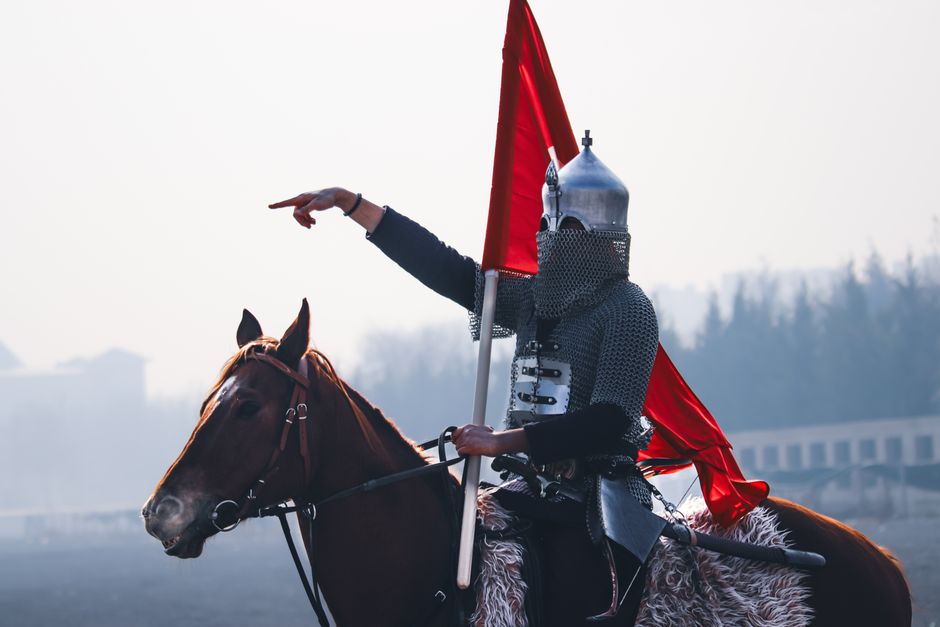
While sound provided immediate alerts, visual signals offered sustained direction for troops on the move. Banners, standards, and pennants acted as essential markers that identified unit positions, command locations, and rallying points. Soldiers were trained to always look for their unit’s colors, which served as an anchor in the shifting, violent landscape of the engagement.
Commanders used these visual markers to guide tactical maneuvers, such as turning a line or pivoting an entire flank. A flag-bearer moving to a new position effectively acted as a mobile command instruction, showing the men where the new front line needed to be. By observing these movements, even soldiers deep in the melee could understand the broader tactical picture and adjust their positioning accordingly.
The Role of Heralds and Messengers
While mechanical signals were crucial for general commands, the most detailed or urgent messages required human intervention. Mounted messengers, often heralds or specialized scouts, navigated the dangers of the battlefield to deliver direct verbal orders from a commander to a captain. This was inherently risky work, but it was essential when specific instructions were too complex for a trumpet blast to convey.
These messengers played a multifaceted role in ensuring tactical coherence:
- They confirmed the receipt of previous signals, ensuring communication loops were closed.
- They relayed critical information about enemy troop movements discovered by scouts.
- They facilitated coordination between disparate units operating on different parts of the field.
Scaling Tactical Signals and Commands for Larger Armies
As armies grew in size throughout the Middle Ages, the complexity of signaling increased exponentially. Managing five thousand men required different protocols than leading five hundred, as the distance between units meant that sound took longer to travel and visual clarity was often obscured. Commanders developed hierarchical signaling systems, where regional captains would repeat or adapt signals from the center.
This tiered approach was necessary to prevent command breakdown, as no single commander could orchestrate every movement across a massive battlefield. By delegating signal repetition, they ensured that messages reached the farthest flanks, even if the primary command post was partially isolated by terrain or enemy action. This development marked a significant step in the professionalization of military leadership.
Challenges and Failures in Communication
Even with advanced signaling protocols, failures were frequent and often catastrophic. Extreme weather conditions, such as driving rain or thick fog, could render visual signals invisible and distort sound over long distances. If a signal was misinterpreted or missed, the resulting gap in coordination could allow an enemy to exploit a weakness or break a critical formation.
Terrain also presented massive obstacles, as hills, forests, and marshes could physically block both sound and sight. A commander might order a charge, but if the signal could not be heard in a valley, part of the line might remain stationary, leaving their comrades dangerously exposed. These risks forced commanders to rely on backup plans and localized communication strategies that did not depend entirely on a central signal.

The Lasting Impact on Battlefield Coordination
The methods used in the medieval period laid the foundation for modern military communication systems, emphasizing the importance of clear, unambiguous signals. While the tools have evolved from trumpets and flags to radios and digital datalinks, the core requirement remains the same: the need for rapid, reliable instructions in a chaotic environment. The lessons learned through the failures of the past directly informed the command structures we see today.
The evolution of these tactics highlights the human ingenuity applied to the extreme pressures of warfare. By mastering tactical signals and commands, medieval commanders learned to harness the chaotic energy of the battlefield, transforming disorganized individuals into a focused, lethal force. These developments remain a testament to the enduring necessity of communication in high-stakes environments.