How Cooperative Gameplay Works In Pc Games
Exploring the World of Cooperative Gameplay
Gaming has long been seen as a solitary pastime, a way to escape into worlds built for one. However, the rise of online connectivity has shifted this focus, bringing people together in ways that define modern gaming culture. Cooperative gameplay, often shortened to co-op, allows players to join forces, combining their skills to tackle challenges that would be impossible to handle alone.
Whether you are raiding a dungeon with friends or defending a base from waves of enemies, the core appeal remains the same: shared success. When individuals align their goals and communicate effectively, the gaming experience becomes something far more dynamic than a single-player journey ever could be. This collaborative approach transforms how we interact with digital environments and each other.
The Mechanics of Shared Success
At its most basic level, cooperative gameplay functions by splitting responsibility among team members. Developers create scenarios where different roles must complement one another, such as a tank character absorbing damage while a healer provides support from behind. This interdependence ensures that no single player can easily steamroll the content without the help of others.
Modern PC games often utilize sophisticated lobby systems or drop-in, drop-out matchmaking to facilitate this. You might find yourself seamlessly joining an ongoing mission, contributing to the team's progress, and then moving on to your next objective. The transition between individual exploration and team-based action has become incredibly fluid, minimizing downtime and maximizing the time spent in the thick of the action.

Designing for Effective Teamwork
True co-op goes beyond simply placing multiple players on the same map. Developers must actively design systems that encourage coordination rather than just parallel play, where players might be in the same space but effectively ignoring each other. Effective design requires mechanics that reward synchronization, such as combo systems where one player freezes an enemy and another shatters them.
This design philosophy extends to puzzle-solving and environmental traversal as well. A common trope involves one player holding a heavy gate open while the other maneuvers through, or one player providing long-range cover fire while their partner maneuvers through a dangerous corridor. These scenarios create moments of genuine teamwork that feel satisfying when executed correctly.
The Social Dynamics of Co-op
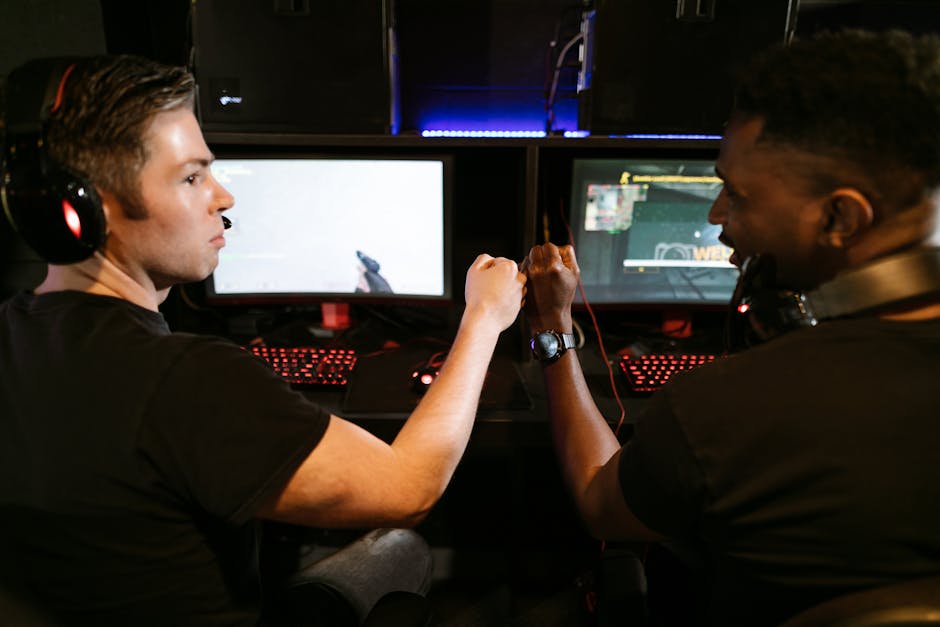
Playing alongside others naturally introduces a social layer that defines much of the cooperative experience. Even without voice chat, the act of working toward a shared goal creates a unique bond between players. You learn to read your partner's intentions, adapting to their playstyle in real-time as the situation on the screen demands.
This dynamic can lead to memorable moments of triumph when a difficult boss is finally downed after repeated failures. Those shared struggles and eventual victories form the backbone of the gaming community, turning casual acquaintances into trusted partners. The reliance on one another fosters a level of engagement and emotional investment that is often absent in solitary play.

Essential Elements for Cooperative Gameplay
For a game to truly excel at co-op, it needs specific features that support and enhance player interaction. Without these foundations, the experience can quickly become disjointed or frustrating. Developers focus on several key pillars to ensure teams can function efficiently:
- Clear Communication Tools: Ping systems and quick-chat menus allow players to coordinate without needing a microphone.
- Synergistic Ability Sets: Character classes or upgrades that clearly benefit from being used alongside teammates.
- Shared Objectives: Concrete goals that clearly outline what the team needs to achieve together to progress.
- Balanced Difficulty Scaling: The game must adjust the challenge level based on the number of players in the group.
Challenges in Cooperative Design
One of the biggest hurdles for designers is balancing the experience for different team sizes. A mission designed for four players can feel trivial for a full squad but overwhelming for two, while a solo player might find it entirely unbeatable. Achieving this balance is critical to keeping the game fun regardless of how many people join the lobby.
Another significant challenge is managing player toxicity or the impact of less-experienced individuals on the team. Developers often implement systems that mitigate the negative effects of poor performance, such as allowing for easy revives or designing mechanics that don't heavily penalize a single player's mistakes. The goal is to keep the focus on fun and cooperation, rather than competition and blame.
Finding Your Perfect Gaming Squad
For many, the biggest obstacle to enjoying co-op games is simply finding the right people to play with. Fortunately, the PC gaming community offers numerous tools to help you connect with players who share your skill level and objectives. Using these resources can turn a mediocre matchmaking experience into a highly productive gaming session.
Discord servers, dedicated game subreddits, and LFG (Looking for Group) tools are invaluable for building a regular squad. When you find players who communicate well and share your enthusiasm for specific games, the cooperative gameplay experience elevates significantly. Investing time in finding the right partners is just as important as mastering the game mechanics themselves.
The Future of Shared Gaming Experiences
Looking ahead, we can expect cooperative mechanics to become even more deeply integrated into the fabric of PC gaming. As artificial intelligence continues to improve, we may see more sophisticated enemy AI that reacts to player strategies, requiring teams to constantly evolve their tactics to stay ahead. The line between solo and co-op may continue to blur as games offer more flexible ways to approach challenges.
Advancements in cloud gaming and cross-platform play will also expand the pool of potential teammates significantly. As accessibility improves, the barrier to entering a shared gaming experience will continue to drop, inviting more people to participate. The future of gaming is undoubtedly collaborative, and the ways we connect through these virtual spaces will only grow more innovative.